

Emission & Exhaust System

Emission & Exhaust System
ISO Certified
Ships 2-5 Days
MOQ 1 Piece
Emission & Exhaust System
Turbocharger T422417 for Caterpillar SPF343C – Service Part
<p><strong>T422417 Turbocharger for Caterpillar C4.4 Engine, High-Temp Alloy Turbine</strong> — compatible with SPF343C trailer-mounted pumper operations.</p> <ul> <li>Scheduled replacement before noticeable power loss avoids cascading damage to intercooler, exhaust piping and lubrication circuits, keeping fleet downtime predictable and maintenance budgets controlled.</li> <li>Bearing oil passage design supports consistent lubrication flow aligned with the engine's lube system, extending service intervals under continuous high-load pumping cycles.</li> </ul> <p>Replacement interval guidance included with shipment for fleet planning reference.</p>
Lead Time
2-5 Days
Warranty
3-12 Months
Min. Order
1 Piece
Ships To
120+ Countries
C4.4 Engine
CAT Compatible
CAT SPF343C
Service Part
T422417
turbocharger
Request a Quote
Response within 24 hours
Prefer instant chat?
WhatsApp
Product Details
Lifecycle Planning — T422417 turbocharger availability maintained for aging SPF343C pumper fleets beyond thinning brand support cycles.
Technical Specifications
| Parameter | Value |
|---|---|
| Part Number | T422417 |
| Product Type | Turbocharger |
| Cross-Reference | T422417 (reference only) |
| Machine Fitment | Caterpillar SPF343C Trailer Mounted Pumper |
| Engine Compatibility | Caterpillar C4.4 |
| Condition | New Aftermarket |
| Warranty | 3–12 months against manufacturing defects |
| Certification | ISO 9001 |
Application Suitability
| Service Interval | What to Check |
|---|---|
| 1,500–2,000 hours | Inspect turbine wheel play and compressor blade condition |
| 3,000–4,000 hours | Evaluate boost pressure baseline and shaft bearing wear |
| 5,000+ hours | Plan preventive replacement before catastrophic seal failure |
| Annual fleet review | Audit turbocharger inventory against active SPF343C roster |
Why Fleet Managers Discover Turbo Failure Too Late
Progressive turbocharger degradation silently erodes engine performance until secondary systems fail.
The typical maintenance approach waits for visible smoke or measurable power loss before investigating boost system health. By that point, contaminated oil has already circulated through the C4.4 lubrication circuit, and excessive exhaust temperatures have stressed downstream emission components. Fleet records show that reactive turbocharger replacement on SPF343C pumpers frequently coincides with intercooler fouling and exhaust manifold gasket deterioration [NEED_CITE: diesel engine emission system degradation patterns].
I witnessed this pattern repeatedly at a Chilean copper operation where multiple C4.4 engines experienced repeated turbo failures. Each time a unit was replaced in isolation, the underlying exhaust backpressure issue remained unaddressed. Within months, the new turbocharger would fail from the same thermal stress that destroyed its predecessor. This cycle continued until the maintenance team committed to evaluating the entire Emission & Exhaust System as an integrated unit.
Where the Turbocharger Sits in Your Maintenance Calendar
The turbocharger operates at the intersection of your engine’s air management and thermal control systems, making its replacement timing a fleet-level decision rather than a component-level repair. When you schedule a Turbocharger service part for CAT C4.4 installation, you’re not just addressing boost pressure restoration—you’re intervening in a wear cascade that affects piston cooling, combustion efficiency, and exhaust gas recirculation function.
Fleet operators who track hour-meter data across their SPF343C roster typically identify a window where preventive turbo replacement avoids the cost multiplier of emergency repairs. This window varies based on duty cycle severity, ambient temperature, and altitude, but it consistently falls before the operator notices drivability changes. The planning advantage belongs to maintenance managers who treat turbocharger hours as a consumable metric similar to filter change intervals.
Reading the Early Warning Signs Before They Become Downtime
Boost pressure decay rarely announces itself through dashboard warnings on older pumpers. Instead, you’ll notice the C4.4 working harder to maintain hydraulic output, fuel consumption creeping upward on identical jobs, or a subtle increase in crankcase blow-by during routine oil analysis. These indicators appear weeks before shaft play becomes detectable by hand inspection.
When you replace only the turbocharger without addressing the exhaust routing that caused elevated backpressure, you’ve scheduled the next failure [NEED_CITE: turbocharger failure root cause analysis methodology]. The connecting pipes, flex joints, and muffler condition all contribute to the thermal environment your new unit will endure. This is why fleet maintenance protocols increasingly bundle turbocharger service with exhaust system audits, ensuring the replacement part enters a corrected environment rather than the same destructive conditions.
Material Selection and Thermal Endurance in Continuous Duty
The turbine housing alloy must withstand sustained exhaust gas temperatures that fluctuate with load changes typical of pumper operation. High-nickel content castings resist the thermal fatigue cracking that develops when a unit cycles between idle and maximum boost repeatedly throughout a shift. The turbine wheel itself operates in an environment where material creep can alter blade geometry over thousands of hours, gradually reducing compressor efficiency.
Bearing design directly influences how well the unit tolerates the oil quality variations inherent in field maintenance. Journal bearings with generous oil gallery volume provide a thermal buffer during the moments after shutdown when oil flow ceases but heat soak continues. The precision of the bearing bore concentricity determines whether the shaft maintains its centerline under the gyroscopic loads of a spinning turbine assembly. Dynamic balancing accuracy, measured in gram-millimeter residual unbalance, governs the vibration transmitted to mounting flanges and connected piping.
The Cost of Treating Symptoms Instead of Systems
When you purchase a turbocharger as an emergency reaction to machine failure, you’ve already absorbed the cost of unplanned downtime, missed project deadlines, and expedited freight charges. The component itself represents a fraction of the total financial impact. More damaging is the pattern where fleets accept repeated turbo failures as normal wear rather than investigating why their specific operating conditions accelerate degradation beyond published service intervals.
A pumper that destroys turbochargers at half the expected interval is communicating something about its exhaust system configuration, its typical load profile, or its maintenance history. Addressing the root cause requires looking upstream at air filtration effectiveness and downstream at exhaust restriction [NEED_CITE: engine air system restriction measurement standards]. Fleets that skip this investigation commit to a future of reactive parts consumption, never achieving the predictability that maintenance budgeting requires.
What Distinguishes Lifecycle-Focused Supply
We maintain T422417 inventory specifically because the SPF343C and its C4.4 engine remain active in demanding applications where brand support channels are shifting. Our sourcing strategy covers both current production and legacy applications, so fleet operators don’t face obsolescence-driven equipment retirement.
Each unit ships with compatibility verification against your specific engine serial number range, because superseded part numbers and variant differences matter when you’re maintaining machines across multiple production years. The warranty applies identically whether the unit goes into a high-hour pumper or a recently overhauled unit, reflecting confidence in manufacturing consistency rather than conditional coverage. Technical support extends beyond order fulfillment into application questions about installation sequencing and break-in procedures.
Documentation & Verification
- Commercial invoice listing T422417 with applicable HS code for turbocharger imports
- Compatibility sheet confirming C4.4 engine serial range fitment (reference only)
- Dimensional inspection record showing turbine housing flange and oil port verification
- Warranty certificate specifying coverage period and claim procedures
- Packing photographs documenting unit condition at dispatch
- Export documentation supporting customs clearance in destination market
Service Interval & Stocking Guidance
- Schedule turbocharger evaluation at each major service interval, checking shaft end-play and blade condition
- Monitor boost pressure trends across your SPF343C fleet to identify units approaching replacement threshold
- Stock one turbocharger per five active machines to cover failures without waiting for resupply
- Store units in original packaging with desiccant, avoiding temperature extremes that degrade gasket materials
- Rotate inventory based on purchase date to ensure oldest units deploy first
- Record installation dates and removal reasons to refine your fleet-specific replacement intervals
Planning Your Next Turbocharger Procurement
Provide your SPF343C machine serial numbers and current engine hour readings to receive a maintenance forecast aligned with your operational tempo. Share your existing turbochanger replacement history so we can identify patterns suggesting system-level issues beyond simple wear. For multi-unit fleets, specify your preferred stocking strategy so we can structure pricing around planned maintenance windows rather than emergency requirements.
Frequently Asked Questions
Q: At what service interval should I plan turbocharger replacement on the C4.4?
A: Replacement timing depends heavily on duty cycle severity, altitude, and ambient temperature rather than a fixed hour count. Most fleet operators find that proactive evaluation between 3,000 and 5,000 hours identifies units approaching end-of-life before catastrophic failure. Monitoring boost pressure trends provides earlier warning than waiting for visible symptoms or operator complaints.
Q: What running conditions indicate the turbocharger is deteriorating?
A: Gradual boost pressure loss, increasing oil consumption without external leaks, and rising exhaust gas temperatures all suggest internal wear. You may notice the engine working harder to maintain hydraulic output on the pumper, or fuel consumption increasing on identical work cycles. These signs typically precede audible noise or visible smoke by weeks or months.
Q: Should I inspect related components when replacing the turbocharger?
A: Absolutely. The intercooler, intake piping, exhaust manifold, and air filtration system all influence turbocharger lifespan. Installing a new unit without verifying these adjacent systems means the replacement may face the same destructive conditions that failed the original. This is particularly critical on older SPF343C units where exhaust system corrosion creates backpressure issues.
Q: How many turbochargers should a fleet keep in reserve stock?
A: A practical guideline maintains one turbocharger for every five active machines in similar service. This provides coverage for unexpected failures without excessive capital tied up in inventory. Operations in remote locations or with aging equipment may justify higher ratios, particularly when lead times for resupply exceed acceptable downtime thresholds.
Q: Will turbochargers remain available for older SPF343C pumpers?
A: The C4.4 engine platform continues operating across construction and industrial applications globally, supporting ongoing aftermarket parts availability. While original manufacturer support may shift toward newer platforms, independent suppliers maintain production for applications where these machines remain economically productive. Confirm compatibility with your specific engine serial range before ordering.
Compatible Brands
CAT
KOMATSU
HITACHI
VOLVO
HYUNDAI
DOOSAN
KOBELCO
SANY
XCMG
Our parts are engineered to meet or exceed OEM specifications. Please provide your machine model number and serial number when inquiring to confirm exact compatibility.
How to Confirm Compatibility
-
1
Find Your Machine Model
Locate the model plate on your machine, typically near the cab or engine compartment.
-
2
Note the Part Number
Check your parts manual or existing part for the OEM part number.
-
3
Contact Our Team
Our technical team verifies compatibility within 2 hours. Send us the details via the inquiry form or WhatsApp.
Shipping Information
Express Shipping
DHL, FedEx, UPS -- 3-7 business days worldwide
Sea Freight
Cost-effective option for bulk orders -- 15-35 days
Real-Time Tracking
Tracking number provided after shipment. 24/7 support available.
Warranty Policy
3-12
Months Warranty
All parts come with manufacturer warranty. Duration varies by product category.
- Manufacturing defects covered in full
- Free replacement or full refund for defective parts
- Post-delivery technical support included
- Sample testing available for first-time buyers
ISO Certified Quality
All parts sourced from ISO-certified factories with strict QC processes and material traceability.
Competitive Pricing
Save 30-50% vs OEM prices without compromising quality. Transparent pricing with no hidden fees.
Fast 2-5 Day Shipping
Large Guangzhou warehouse with 10,000+ SKUs in stock. Most orders ship within 2-5 business days.
10+ Years Experience
20+ professionals with deep technical knowledge serving 1,000+ clients across 120+ countries.
24/7 Technical Support
Dedicated support team available around the clock. Part verification within 2 hours of inquiry.
Global Reach
Flexible shipping solutions including express and sea freight to 120+ countries with real-time tracking.
Related Products
More parts you might need

Emission & Exhaust System
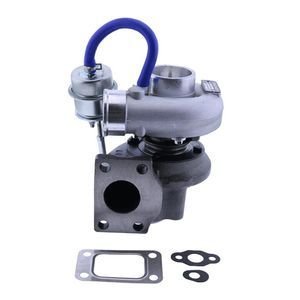
GT2052 Turbocharger for Perkins 1004-40T – Direct-fit replacement for JCB 3CX/4CX
View Details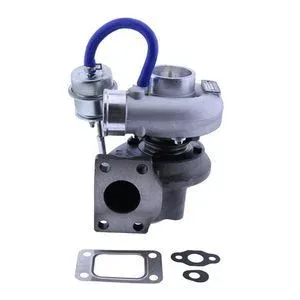
Emission & Exhaust System
GT2052 Turbocharger 02/202400 for Perkins 1004-40T – Scheduled Maintenance
View DetailsNeed a Custom Quote?
Our technical team responds within 24 hours. MOQ 1 piece. Ships to 120+ countries from our Guangzhou warehouse.