Belt Drive Systems
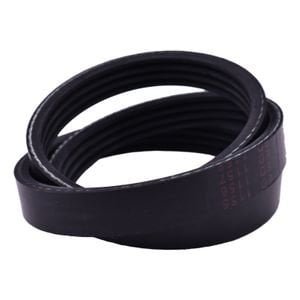
Wear Item V-Belt MIU13962 Compatible with Yanmar 3TNV70
<p>Replacement interval guidance included with every shipment to support fleet-level maintenance planning.</p>
Lead Time
2-5 Days
Warranty
3-12 Months
Min. Order
1 Piece
Ships To
120+ Countries
Request a Quote
Response within 24 hours
Product Details
Fleet Stocking — EPDM drive belts for Yanmar and John Deere utility vehicles kept in Guangzhou inventory for scheduled fleet replacement cycles.
Technical Specifications
| Parameter | Value |
|---|---|
| Part Number | MIU13962 |
| Product Type | Belt |
| Cross-Reference | MIU13962 (reference only) |
| Machine Fitment | Yanmar 3TNV70, John Deere Gator XUV series (4X4, UV72, XUV, XUV590E, XUV590E S4, XUV590i, XUV590i S4, XUV590M, XUV590M S4, XUV825E, XUV825i, XUV825I S4, XUV825M, XUV825M S4, XUV835E, XUV835M, XUV835R) |
| Material | EPDM rubber with reinforced polyester cord |
| Operating Temperature | 150°C (302°F) continuous |
| Condition | New Aftermarket (OEM-equivalent) |
| Warranty | 3–12 months against manufacturing defects |
| Standards | ISO 9001, ISO 4184:2019 |
Application Suitability
| Service Interval | What to Check |
|---|---|
| Preventive maintenance cycle (hours-based) | Belt tension, edge wear, surface cracking, pulley alignment |
| Rental fleet turnover between deployments | Glazing, fraying, cord exposure, tensioner spring condition |
| Aging equipment beyond OEM thin support | Cross-reference verification, dimensional match, sheave groove match |
| Mining support fleet standby stock | EPDM compound integrity after storage, shelf-life rotation |
| Agricultural seasonal startup | Hardening, loss of flexibility, squeal under load |
Why Fleet Operators Lose Weeks Over a V-Belt Service Part
A low-cost V-belt service part should never dictate machine availability for an entire fleet.
Utility vehicle fleets running Yanmar 3TNV70 or John Deere Gator engines frequently treat drive belts as run-to-failure components. When a belt snaps in a remote mining camp or agricultural site, the machine sits idle while procurement scrambles to source a single wear item through emergency channels. I have watched support vehicles in Latin American mining operations sit dead for two full weeks because no one scheduled a replacement for a predictable wear component [NEED_CITE: preventive maintenance scheduling standards for mobile support fleets]. The V-belt service part is not a surprise failure — it degrades on a known curve and should be replaced before the failure event.
Fleet maintenance planners who benchmark replacement intervals against operating hours avoid this pattern entirely. Stocking a V-belt service part ahead of the wear-out point costs a fraction of the downtime it prevents.
Where This Belt Sits in the Machine Service Lifecycle
The MIU13962 serves as the primary drive belt in compact utility vehicle engine bays and industrial generator sets. In the lifecycle of a Yanmar 3TNV70 or a John Deere Gator XUV825M, this belt transfers crankshaft rotation to auxiliary systems — alternator, water pump, cooling fan — that the engine cannot function without. As a V-belt service part, it occupies the shortest replacement interval in the engine accessory drive system, meaning it will be swapped multiple times before major components like the water pump or tensioner require attention.
Fleet-level thinking treats this component as scheduled consumption, not a repair event. Rental companies rotating machines between contracts and mining operations supporting haul fleets both benefit from aligning belt replacement with other periodic maintenance windows. This avoids pulling a machine off-line for a standalone belt change.
Wear Progression and Linked Component Risk
EPDM drive belts degrade through heat cycling, ozone exposure, and mechanical flexing. The earliest visible indicators include surface micro-cracking on the ribbed face, edge fraying where the belt contacts the sheave groove, and glazing that reduces grip [NEED_CITE: belt wear progression indicators for industrial V-belts]. A glazed belt slips under load, generating excess heat that accelerates hardening and shortens remaining life.
When a belt operates past its service window, the consequences extend beyond the belt itself. A slipping drive belt starves the water pump, raising coolant temperatures. It under-drives the alternator, dropping electrical system voltage. Planned replacement of the V-belt service part at the correct interval protects these driven accessories from secondary damage. Tensioners and idler pulleys also experience accelerated bearing wear when forced to compensate for an elongated or hardened belt.
Reading the Specifications That Matter
The EPDM rubber compound in this belt is selected for continuous operation at 150°C (302°F), which covers the under-hood thermal environment of compact diesel and gasoline engines working under load. EPDM resists ozone cracking and oxidation far better than standard chloroprene compounds, which matters in engine bays where ambient temperatures cycle repeatedly between cold starts and sustained high-load operation [NEED_CITE: EPDM versus chloroprene thermal degradation in automotive drive applications].
The reinforced polyester cord maintains dimensional stability across the belt’s operating life. Polyester does not elongate under continuous tension the way aramid or cotton cords can in high-heat environments, which keeps belt tracking consistent and prevents misalignment-induced edge wear. The cross-section geometry is machined to match the sheave groove profile of the target engines, ensuring full flank contact that distributes load evenly rather than riding on the belt edges.
The Accumulating Cost of Reactive Belt Procurement
When a fleet buys drive belts only after failure, the cost compounds beyond the belt price. A utility vehicle down on a construction site or mining lease carries daily costs in lost productivity, idle operator wages, and delayed downstream tasks. Emergency sourcing introduces premium freight charges and lead times that turn a minutes-long swap into a multi-day outage.
I encountered this pattern repeatedly with mining support fleets in remote regions: a single snapped belt on a Yanmar 3TNV70 generator set would cascade into lost lighting, lost ventilation support, and lost water pumping capacity until the replacement arrived [NEED_CITE: unplanned downtime cost modeling for remote fleet operations]. The V-belt service part itself is inexpensive. The two-week wait for delivery in a location with no local supply is what makes reactive procurement destructive. Planned stocking eliminates this exposure entirely.
Why Source This Wear Item Through XUNPO
Our production and sourcing lines carry the same quality control and warranty terms, so whether the belt comes from our own facility or a qualified ISO-certified partner, the coverage is identical. The MIU13962 sits within our eight-category inventory, meaning a fleet maintenance order can include belts, filters, seal kits, and engine internals under a single account and a single dispatch.
Minimum order is one piece, so a single emergency replacement ships without MOQ barriers, while bulk stocking orders for fleet-wide preventive maintenance are handled on the same terms. Cross-reference verification covers superseded and alternate numbers, which matters when older Gator models carry part numbers that have been revised across production generations. Our technical team confirms engine serial compatibility and grade suitability before the order ships. Guangzhou warehouse stock enables fast dispatch on this common wear item for operators who need to build standby inventory on a known timeline.
Documentation & Verification
- Commercial invoice listing MIU13962 with correct HS code for customs clearance
- Compatibility sheet mapping belt to Yanmar 3TNV70 and John Deere Gator serial ranges (reference only)
- Dimensional inspection record confirming cross-section geometry and cord integrity
- Warranty terms document covering 3–12 months against manufacturing defects
- Packing photographs showing belt condition and protective packaging before dispatch
- Export documentation support including material declarations for EPDM compound
Service Interval & Stocking Guidance
- Replace the EPDM V-belt at intervals aligned with engine operating hours and OEM maintenance schedules
- Inspect belt surface for micro-cracking, glazing, and edge fraying during every routine service visit
- Stock one spare belt per machine for remote-site fleets, two per model variant for mixed fleets
- Store belts in sealed packaging away from direct sunlight, ozone sources, and temperatures above 40°C
- Rotate shelf stock on a first-in-first-out basis to preserve EPDM compound flexibility
- Record belt replacement dates and hours in fleet maintenance logs to refine future interval estimates
Share Your Fleet Details for Stocking Advice
Provide your machine models, engine serial numbers, and current operating hours so we can confirm the MIU13962 fits your specific equipment variant. If you manage a mixed fleet, share the model breakdown and we will map replacement quantities to your service cadence. For older or discontinued Gator models, supply the nameplate image or engine plate details so our team can verify cross-reference compatibility before you commit to a stocking order.
Frequently Asked Questions
Q: How often should drive belts be replaced on Yanmar 3TNV70 and Gator engines?
A: Replacement intervals depend on operating hours and environment. Machines running in high-heat or high-dust conditions consume belts faster than those in moderate service. We recommend checking the belt surface and tension at every scheduled service and planning replacement when micro-cracking or glazing appears, rather than waiting for failure. Share your operating hours and conditions for interval guidance specific to your fleet.
Q: What wear signs indicate the belt needs replacement before failure?
A: Look for surface micro-cracks across the ribbed face, fraying along the belt edges, glazing that creates a shiny contact surface, and squealing under load. A belt that has hardened and lost flexibility is near end of service life even if it appears intact visually. These indicators appear progressively, giving maintenance teams a window to schedule replacement before an unplanned snap.
Q: Should the tensioner and pulleys be replaced at the same time?
A: Not necessarily at every belt change, but they should be inspected each time. Tensioner springs lose force over time and pulley bearings develop play that accelerates belt wear. If the tensioner shows weakness or a pulley has detectable radial play, replacing them alongside the belt prevents premature wear on the new belt and avoids a second service event weeks later.
Q: How many spare belts should a fleet keep on hand?
A: For remote-site fleets with limited local supply, one spare per machine is a practical baseline. Mixed fleets running multiple Gator variants or both Yanmar and John Deere models should stock at least one per model type. Rental operations with high turnover may benefit from higher buffer quantities aligned with deployment cycles. We can help calculate quantities based on your fleet size and service cadence.
Q: Can this belt still be sourced for older or discontinued Gator models?
A: Yes. Cross-reference verification covers superseded part numbers and alternate references that apply to earlier production runs. Older XUV models may carry revised part numbers across generations. Provide the machine model, engine serial number, or a photograph of the nameplate so our team can confirm the correct fitment before dispatch, even when the original part number has been superseded.
Compatible Brands
Our parts are engineered to meet or exceed OEM specifications. Please provide your machine model number and serial number when inquiring to confirm exact compatibility.
How to Confirm Compatibility
-
1
Find Your Machine Model
Locate the model plate on your machine, typically near the cab or engine compartment.
-
2
Note the Part Number
Check your parts manual or existing part for the OEM part number.
-
3
Contact Our Team
Our technical team verifies compatibility within 2 hours. Send us the details via the inquiry form or WhatsApp.
Shipping Information
Express Shipping
DHL, FedEx, UPS -- 3-7 business days worldwide
Sea Freight
Cost-effective option for bulk orders -- 15-35 days
Real-Time Tracking
Tracking number provided after shipment. 24/7 support available.
Warranty Policy
All parts come with manufacturer warranty. Duration varies by product category.
- Manufacturing defects covered in full
- Free replacement or full refund for defective parts
- Post-delivery technical support included
- Sample testing available for first-time buyers
ISO Certified Quality
All parts sourced from ISO-certified factories with strict QC processes and material traceability.
Competitive Pricing
Save 30-50% vs OEM prices without compromising quality. Transparent pricing with no hidden fees.
Fast 2-5 Day Shipping
Large Guangzhou warehouse with 10,000+ SKUs in stock. Most orders ship within 2-5 business days.
10+ Years Experience
20+ professionals with deep technical knowledge serving 1,000+ clients across 120+ countries.
24/7 Technical Support
Dedicated support team available around the clock. Part verification within 2 hours of inquiry.
Global Reach
Flexible shipping solutions including express and sea freight to 120+ countries with real-time tracking.
Related Products
More parts you might need


Need a Custom Quote?
Our technical team responds within 24 hours. MOQ 1 piece. Ships to 120+ countries from our Guangzhou warehouse.