
Engine Auxiliary Components
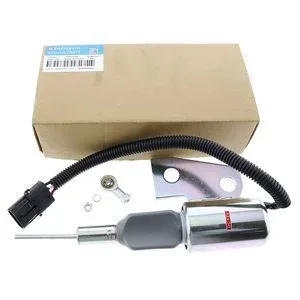
12V Stop Solenoid 3991167 Replacement for Cummins 4BT Service Part
<p><strong>12V Stop Solenoid 3991167 Replacement for Cummins 4BT</strong> — compatible with Hyundai R130 and R170 excavators, featuring low-carbon steel core and copper-clad aluminum coil. Proactive replacement during scheduled maintenance prevents unplanned shutdowns caused by coil insulation degradation or plunger friction wear over sustained operating cycles. Evaluate adjacent fuel control linkages and bushings for concurrent service when planning component exchange. Fleet operators stocking multiple R-series units benefit from predictable interval planning. Replacement cycle recommendations aligned with your operating environment provided with shipment.</p> <ul> <li>Cross-reference: SA-4941-12, 3964627</li> <li>MOQ: 1 piece</li> <li>Warranty: 3–12 months</li> </ul>
Lead Time
2-5 Days
Warranty
3-12 Months
Min. Order
1 Piece
Ships To
120+ Countries
Request a Quote
Response within 24 hours
Product Details
Lifecycle Planning — Scheduled replacement mapping for Cummins 4BT auxiliary solenoids across R-series fleets keeps maintenance windows predictable and downtime contained.
Technical Specifications
| Parameter | Value |
|---|---|
| Part Number | 3991167 |
| Product Type | Stop Solenoid |
| Cross-Reference | 3991167, SA-4941-12, SA494112, 3964627 (reference only for identification purposes) |
| Machine Fitment | Hyundai R130, Hyundai R170 |
| Engine Compatibility | Cummins 4BT |
| Voltage | 12V |
| Core Material | Low-carbon steel |
| Coil Winding | Copper-clad aluminum |
| Coil Insulation Class | IEC 60034 Class B |
| Condition | New Aftermarket |
| Standards | ISO 9001, IEC 60034, ISO 8528-3 |
| Warranty | 3–12 months against manufacturing defects |
| Minimum Order | 1 piece |
Application Suitability
| Service Interval | What to Check |
|---|---|
| Every 2,000 operating hours | Inspect coil insulation resistance and plunger travel smoothness |
| Annual fleet maintenance review | Verify solenoid actuation response time under load |
| Pre-season mobilization | Check mounting bolt pattern alignment and electrical connector integrity |
| Post-overhaul recommissioning | Confirm plunger stroke and linkage engagement with fuel shutoff lever |
| High-dust or coastal deployment cycle | Assess plunger surface wear and coil thermal stability |
Why Planned Replacement Matters More Than Reaction for a Stop Solenoid
Most fleet shutdowns trace back to auxiliary components that were never scheduled for replacement until they failed on shift.
In my time sourcing parts for equipment fleets across Dubai and Riyadh, the pattern repeated constantly: an excavator goes down mid-cycle because a stop solenoid seized or an open coil prevented engine shutdown, and the whole site schedule shifts around a part that costs little but stops everything. Maintenance teams treat the Stop Solenoid service part for Cummins 4BT maintenance as a run-to-failure item, yet the failure mode — whether it is coil insulation breakdown or plunger friction buildup — develops gradually over hundreds of operating hours. [NEED_CITE: planned maintenance intervals for auxiliary engine solenoids in heavy equipment]
Fleet managers who track operating hours and schedule auxiliary component swaps during planned service windows consistently report fewer unplanned stops. The cost is not the part itself; it is the idle crew, the missed concrete pour window, or the delayed trench backfill that a single solenoid failure can trigger on a busy site.
Where This Solenoid Sits in the Fleet Service Calendar
The stop solenoid occupies a specific position in the Cummins 4BT auxiliary system lifecycle — it is neither a high-wear consumable like filters nor a major assembly like an injection pump. It falls into the category of interval-service components where proactive replacement during scheduled maintenance prevents unplanned shutdowns. For Hyundai R130 and R170 fleets running extended shifts in Middle Eastern conditions, the Stop Solenoid service part for Cummins 4BT maintenance should align with major service milestones rather than waiting for fault symptoms.
Reading the Wear Signals Before Failure
Coil insulation degradation and plunger surface wear accumulate progressively, and the signs are readable before complete failure occurs. A solenoid that begins to respond sluggishly during shutdown commands, or one that requires multiple key cycles to release, is signaling advanced wear on the plunger surface or weakening magnetic field from thermal cycling. [NEED_CITE: solenoid coil thermal degradation patterns in high-ambient-temperature environments] Linked wear on adjacent fuel control levers and injection pump linkages often accelerates once a solenoid starts sticking, turning a simple component swap into a multi-part repair.
What the Insulation Class and Tolerances Mean in Practice
The IEC 60034 Class B insulation rating on the coil winding defines the thermal ceiling this solenoid can sustain across continuous duty cycles. In environments where ambient temperatures regularly push beyond 45°C, the insulation class determines whether the coil survives a full shift without progressive breakdown. The copper-clad aluminum coil construction balances conductivity with weight, while the low-carbon steel core provides the magnetic path for consistent plunger actuation. Plunger stroke length tolerance directly affects how completely the fuel shutoff lever engages — a tolerance drift means the lever may not reach full travel, leaving the engine in an ambiguous state between run and stop. Mounting bolt pattern accuracy at 0.1 mm positional tolerance ensures the solenoid aligns with the existing bracket and linkage geometry on the Hyundai R130 and R170 without forcing the installer to modify mounting points.
The Accumulated Cost of Reactive Procurement
Every unplanned solenoid failure on a working site carries downstream costs that dwarf the component price. The machine sits idle while procurement identifies the correct part number, arranges freight, and waits for delivery. In a fleet running multiple R-series units, reactive purchasing means each machine experiences its own shutdown event independently, multiplying the total lost hours across the project timeline. [NEED_CITE: cumulative downtime cost modeling for auxiliary component failures in earthmoving fleets] A maintenance approach that stocks replacement solenoids ahead of predictable consumption and swaps them during scheduled windows compresses what would be separate emergency events into a single planned service action.
Procurement Built Around Fleet Maintenance Cadence
Our production and sourcing lines operate under unified quality control and a single warranty framework, so whether a stop solenoid comes from our own facility or a qualified ISO-certified partner, the terms remain consistent. We supply across eight core equipment categories from one account, which means a fleet maintenance order covering solenoids, filters, seal kits, and undercarriage components ships as one consolidated dispatch. Minimum order starts at one piece, so you can replace a single failed unit or batch-order for an entire fleet without separate purchase processes. Our Guangzhou warehouse maintains stock on common fast-failure items for immediate dispatch. Part identification works from the OEM reference number, machine model, equipment photograph, or nameplate image — whichever identifier you have available. Cross-reference verification covers superseded and alternate part numbers, and we can provide sample units for fitment confirmation before you commit to a bulk order. Technical support is available to verify compatibility and grade confirmation for your specific fleet configuration.
Documentation & Verification
- Commercial invoice and packing list with 3991167 line-item detail and HS code
- Cross-reference sheet mapping SA-4941-12, SA494112, and 3964627 (reference only)
- Dimensional inspection record covering plunger stroke and bolt pattern accuracy
- Warranty terms document specifying 3–12 month coverage against manufacturing defects
- Packing photographs showing solenoid protection and shipment condition
- Customs documentation support with correct tariff classification for Gulf imports
Service Interval & Stocking Guidance
- Schedule stop solenoid inspection every 2,000 hours alongside fuel system service checks
- Monitor plunger actuation smoothness and coil response time during routine PM walks
- Stock one replacement unit per three R-series machines for high-utilization fleets
- Store spare solenoids in sealed packaging away from moisture and direct heat exposure
- Replace proactively when shutdown response shows any measurable delay
- Record operating hours at each solenoid swap to refine future interval planning
Requesting a Lifecycle Supply Quote
When you are planning fleet maintenance for Hyundai R130 or R170 units, share your machine model list and current operating hours so we can align solenoid supply with your service calendar. If you are supporting older R-series machines where OEM availability has thinned, provide your engine serial numbers and we will verify cross-reference compatibility and confirm long-term supply continuity.
Frequently Asked Questions
Q: How often should the stop solenoid be replaced under normal operating conditions?
A: For Cummins 4BT engines in Hyundai R-series excavators running standard shifts, schedule stop solenoid inspection at each major service interval and plan proactive replacement based on coil resistance readings and plunger travel assessment. In high-dust or high-temperature environments, shorten the check cycle. The Stop Solenoid service part for Cummins 4BT maintenance aligns best with fuel system service windows.
Q: What symptoms indicate the solenoid is approaching end of service life?
A: Delayed engine shutdown response, intermittent failure to release the fuel shutoff lever, or audible clicking without full plunger travel all signal wear. Coil insulation degradation may also show as inconsistent resistance readings across thermal cycles. Address these signals during the next scheduled maintenance rather than waiting for complete failure on shift.
Q: Should I replace just the solenoid or the entire fuel shutoff assembly?
A: If the fuel control lever, pivot bushings, and linkage show no wear or deformation, replacing the stop solenoid alone is typically sufficient. However, when solenoid failure has caused repeated sticking or forced manual override, inspect the full assembly. Linked component wear from a seized solenoid can cause early failure of the replacement unit.
Q: How many units should I stock for a fleet of R-series excavators?
A: A practical baseline is one spare stop solenoid per three Hyundai R130 or R170 machines in active rotation, adjusted upward for high-utilization contracts or remote sites with extended resupply timelines. Align stock levels with your maintenance calendar so planned swaps draw from inventory rather than triggering emergency orders.
Q: Can I still source this part for older Hyundai R130/R170 machines?
A: Yes. Cross-reference numbers including SA-4941-12 and 3964627 (reference only) remain mapped in our system for identification purposes. We verify compatibility against engine serial variants and can confirm supply continuity for aging platforms where dealer support has reduced. Provide your engine build details for accurate matching.
Compatible Brands
Our parts are engineered to meet or exceed OEM specifications. Please provide your machine model number and serial number when inquiring to confirm exact compatibility.
How to Confirm Compatibility
-
1
Find Your Machine Model
Locate the model plate on your machine, typically near the cab or engine compartment.
-
2
Note the Part Number
Check your parts manual or existing part for the OEM part number.
-
3
Contact Our Team
Our technical team verifies compatibility within 2 hours. Send us the details via the inquiry form or WhatsApp.
Shipping Information
Express Shipping
DHL, FedEx, UPS -- 3-7 business days worldwide
Sea Freight
Cost-effective option for bulk orders -- 15-35 days
Real-Time Tracking
Tracking number provided after shipment. 24/7 support available.
Warranty Policy
All parts come with manufacturer warranty. Duration varies by product category.
- Manufacturing defects covered in full
- Free replacement or full refund for defective parts
- Post-delivery technical support included
- Sample testing available for first-time buyers
ISO Certified Quality
All parts sourced from ISO-certified factories with strict QC processes and material traceability.
Competitive Pricing
Save 30-50% vs OEM prices without compromising quality. Transparent pricing with no hidden fees.
Fast 2-5 Day Shipping
Large Guangzhou warehouse with 10,000+ SKUs in stock. Most orders ship within 2-5 business days.
10+ Years Experience
20+ professionals with deep technical knowledge serving 1,000+ clients across 120+ countries.
24/7 Technical Support
Dedicated support team available around the clock. Part verification within 2 hours of inquiry.
Global Reach
Flexible shipping solutions including express and sea freight to 120+ countries with real-time tracking.
Related Products
More parts you might need


Engine Auxiliary Components
Laser Iridium Spark Plugs SILZKR7C11S for Honda CR-V & Accord 2008–2016
View Details
Engine Auxiliary Components
Scheduled Maintenance Glow Plug 185366190 TPN257 for Perkins 404D-22
View DetailsNeed a Custom Quote?
Our technical team responds within 24 hours. MOQ 1 piece. Ships to 120+ countries from our Guangzhou warehouse.