
Belt Drive Systems
Belt Tensioner Assembly for Cummins ISB, QSB – Fleet Supply
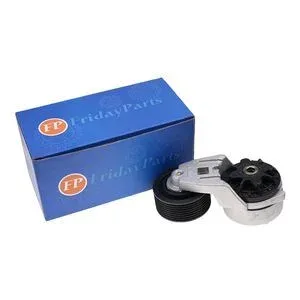
<p><strong>3936213, 5259022, 3976831 Belt Tensioner Assembly, Forged SAE 1045 Steel, Hydraulic Damper</strong> — replacement for Cummins 6C, ISB, QSB, ISC, QSL and B-series engines. This tensioner is a predictable wear item; replacing it at scheduled belt service intervals prevents derailment and downstream damage to alternator and water pump bearings. Hydraulic damping maintains consistent belt tension across temperature and load variations. Sourced for fleet-level planned maintenance across excavators, loaders and power generation units.</p> <ul> <li>Replacement interval guidance included with shipment for scheduling alignment</li> </ul>
Lead Time
2-5 Days
Warranty
3-12 Months
Min. Order
1 Piece
Ships To
120+ Countries
Request a Quote
Response within 24 hours
Product Details
Fleet Stocking Ready — Belt tensioner assemblies for Cummins platforms held in Guangzhou inventory for predictable service-interval replenishment, supporting mixed fleets from ISB through QSL.
Technical Specifications
| Parameter | Value |
|---|---|
| Product Type | Belt Tensioner Assembly |
| Part Number | 3936213, 5259022, 3976831 |
| Cross-Reference | 3936213 (reference only), 5259022 (reference only), 3976831 (reference only) |
| Machine Fitment | 6C, ISB, QSB, 4B3.9, B4.5, 6B5.9, B6.7, 4B, 6B, ISC, QSC, ISL, QSL |
| Condition | New Aftermarket |
| Material | Forged SAE 1045 steel (pulley hub) |
| Surface Treatment | Zinc-nickel electroplated |
| Hardness | Rockwell HRC 42–46 |
| Damping Type | Calibrated hydraulic damper |
| Sealing Rating | IP65 |
| Dimensional Tolerance | ±0.05 mm |
| Operating Temperature Range | –20°C to +110°C |
| Corrosion Resistance | 720-hour salt-spray per ASTM B117 |
| Standards | ISO 9001, SAE J1940, Cummins Engineering Specification CES-11027, ASTM B117 |
| Warranty | 3–12 months against manufacturing defects |
| MOQ | 1 piece |
Application Suitability
| Service Interval | What to Check |
|---|---|
| Every belt replacement cycle | Pulley bearing play, damper arm resistance, hub surface scoring |
| 2,000–3,000 operating hours | Hydraulic damper leak signs, spring fatigue, belt tracking alignment |
| Annual fleet maintenance audit | Cross-reference superseded numbers against updated Cummins bulletins |
| Pre-deployment for rental units | Full accessory drive inspection including idler pulleys and alternator bearings |
| Older platform overhauls (6C, 4B3.9) | Verify mounting pattern and arm length against engine serial range |
Why a Planned Belt Tensioner Replacement Beats a Reactive One
A belt tensioner service part for Cummins engines that fails between scheduled services turns a minor line item into cascading accessory drive damage.
I spent years in the Pearl River Delta repair bays watching fleet managers treat the tensioner as a "replace when it breaks" component. The pattern was always the same: a seized tensioner pulley would throw the serpentine belt, the alternator would stop charging, the water pump would stop circulating, and a machine that needed a single component swap would sit idle for days waiting for collateral damage assessment [NEED_CITE: accessory drive failure cascade patterns in off-highway diesel engines]. For fleets running Cummins ISB and QSB platforms across excavators, loaders, and gensets, the belt tensioner is a predictable wear item whose replacement interval should align with belt and pulley service cycles, not with emergency breakdowns.
Where the Tensioner Sits in the Machine Service Life
The belt tensioner occupies a critical midpoint in the accessory drive system lifecycle. It is neither a consumable like the serpentine belt nor a durable assembly like the alternator. A belt tensioner service part for Cummins engines typically outlasts two to three belt change intervals before its hydraulic damper loses calibration or its pulley bearing develops radial play. Fleet operators who track this replacement node alongside belt service events avoid the compounding cost of secondary failures.
Reading the Wear Signs Before the Machine Goes Down
The earliest indicator is belt chirp at cold start, caused by the damper losing its ability to absorb torque pulses from the crankshaft. Next comes visible belt dust around the tensioner pulley, indicating the hub is no longer maintaining consistent tracking. I have seen rental fleet supervisors catch these signs during morning walk-arounds and schedule the swap for the next fuel stop, keeping machines productive. Missing these signals means the tensioner arm eventually seizes, and the belt walks off the pulley stack entirely [NEED_CITE: belt drive system wear progression indicators for heavy-duty diesel applications]. Linked components like idler pulleys and water pump bearings also accumulate wear on the same timeline, making a coordinated replacement more economical than staggered repairs.
Decoding the Specs That Matter in the Field
The forged SAE 1045 steel pulley hub provides a hardness range of HRC 42–46, which resists groove wear from the belt rib contact surface over extended service intervals. Zinc-nickel electroplating paired with a 720-hour salt-spray rating per ASTM B117 protects the hub and arm assembly in coastal and high-humidity job sites common across southern China and Southeast Asian deployments. The calibrated hydraulic damper maintains belt tension within specification across the –20°C to +110°C operating window, preventing both slack-induced slip at cold start and over-tension bearing loads at peak thermal expansion. The IP65 sealing rating keeps the damper internals isolated from silica dust and washdown water ingress. Dimensional tolerance held to ±0.05 mm ensures the pulley groove aligns with adjacent idlers without requiring field shimming or bracket modification.
The Accumulated Cost of Skipping the Scheduled Swap
When a tensioner fails reactively on a Cummins 6B5.9 or ISC platform, the downstream inventory pull balloons. The belt is now shredded, the alternator pulley may be scored, and the water pump bearing could have taken lateral load from the whipping belt. What started as a single-component scheduled replacement becomes a multi-line purchase order with staggered lead times. I have watched contractors lose entire work shifts because the replacement tensioner arrived but the matching belt specification was back-ordered [NEED_CITE: unplanned downtime cost multipliers in construction fleet maintenance]. Fleet operators who treat this component as a planned stock item rather than an emergency purchase accumulate meaningful savings in avoided secondary damage and consolidated shipping cycles.
What Makes This Supply Chain Different
Our selected production lines and qualified sourced supply carry the same QC protocol and warranty terms, so you order from one account regardless of origin. Eight product categories mean the tensioner ships alongside filters, seal kits, and undercarriage parts in a single consignment, eliminating split freight. The one-piece minimum order means you can validate fitment on a single ISB unit before committing to a fleet-wide stock order. Guangzhou warehouse stock on common Cummins platforms supports fast dispatch when your maintenance calendar demands it. Cross-reference verification covers superseded numbers across 6C, 4B3.9, and B-series variants, so older engines do not get orphaned. Our technical team confirms compatibility and damper specification against your engine serial range before dispatch.
Documentation & Verification
- Commercial invoice listing all part numbers with Cummins platform cross-references
- Compatibility sheet mapping 3936213, 5259022, and 3976831 to specific engine serial ranges (reference only)
- Dimensional inspection record confirming ±0.05 mm tolerance on pulley hub and mounting face
- Warranty terms covering manufacturing defects for 3 to 12 months depending on application
- Packing photographs showing anti-rust coating integrity and foam cushioning before crate closure
- HS code classification and customs documentation support for destination-country import clearance
Service Interval & Stocking Guidance
- Replace the tensioner assembly at every second or third serpentine belt interval, whichever comes first
- Inspect hydraulic damper arm resistance and pulley bearing play during each scheduled belt check
- Stock one unit per five machines on ISB/QSB platforms; increase ratio for older 6C and 4B3.9 units
- Store in original sealed packaging with anti-rust coating intact until installation date
- Keep units in climate-controlled inventory below 40°C to preserve damper fluid viscosity specification
Request Your Maintenance Quantity
Send us your fleet composition including engine models, serial ranges, and current service hour readings. We will map the correct tensioner variant to each platform and recommend a stocking quantity aligned with your maintenance calendar and deployment cycle.
Frequently Asked Questions
Q: How often should the belt tensioner be replaced on Cummins ISB and QSB engines?
A: Replacement intervals typically align with every second or third serpentine belt change, depending on operating environment and load profile. Inspect the hydraulic damper arm for resistance loss and the pulley bearing for radial play at each belt service. Machines in high-dust or high-vibration applications may require more frequent tensioner swaps to prevent belt derailment and accessory drive damage.
Q: What other components should be inspected or replaced at the same service interval?
A: The serpentine belt, idler pulleys, and alternator mounting hardware should be evaluated whenever the tensioner is removed. Water pump and alternator bearings accumulate wear on the same timeline and may show early play symptoms during the tensioner swap. Replacing the belt and checking all pulleys in one service event avoids staggered downtime and second freight charges.
Q: Should I replace just the tensioner or the entire belt drive assembly?
A: On most Cummins B-series and C-series platforms, the tensioner is a standalone assembly that bolts to the front cover without requiring bracket or bracket-hardware replacement. However, if the mounting face shows fretting or the bolt holes are elongated, the bracket should be included in the order. Our technical team can confirm the scope based on your engine serial number and photographs.
Q: How many units should a fleet operator keep in stock?
A: A practical baseline is one tensioner per five machines on active ISB and QSB platforms, with additional units for older 6C and 4B3.9 engines where lead times may be longer. Rental fleets with rapid turnover should increase the ratio to account for pre-deployment inspections. We support single-piece orders so you can validate fitment before scaling your stock commitment.
Q: Can I still get support for older Cummins 6C and 4B3.9 engines?
A: Yes. These platforms remain in active service across construction and power generation applications, and our cross-reference verification covers superseded part numbers for these legacy engines. We confirm mounting pattern, arm length, and damper specification against your engine serial range before dispatch, ensuring the correct variant ships even when the original nameplate is unreadable.
Compatible Brands
Our parts are engineered to meet or exceed OEM specifications. Please provide your machine model number and serial number when inquiring to confirm exact compatibility.
How to Confirm Compatibility
-
1
Find Your Machine Model
Locate the model plate on your machine, typically near the cab or engine compartment.
-
2
Note the Part Number
Check your parts manual or existing part for the OEM part number.
-
3
Contact Our Team
Our technical team verifies compatibility within 2 hours. Send us the details via the inquiry form or WhatsApp.
Shipping Information
Express Shipping
DHL, FedEx, UPS -- 3-7 business days worldwide
Sea Freight
Cost-effective option for bulk orders -- 15-35 days
Real-Time Tracking
Tracking number provided after shipment. 24/7 support available.
Warranty Policy
All parts come with manufacturer warranty. Duration varies by product category.
- Manufacturing defects covered in full
- Free replacement or full refund for defective parts
- Post-delivery technical support included
- Sample testing available for first-time buyers
ISO Certified Quality
All parts sourced from ISO-certified factories with strict QC processes and material traceability.
Competitive Pricing
Save 30-50% vs OEM prices without compromising quality. Transparent pricing with no hidden fees.
Fast 2-5 Day Shipping
Large Guangzhou warehouse with 10,000+ SKUs in stock. Most orders ship within 2-5 business days.
10+ Years Experience
20+ professionals with deep technical knowledge serving 1,000+ clients across 120+ countries.
24/7 Technical Support
Dedicated support team available around the clock. Part verification within 2 hours of inquiry.
Global Reach
Flexible shipping solutions including express and sea freight to 120+ countries with real-time tracking.
Related Products
More parts you might need


Need a Custom Quote?
Our technical team responds within 24 hours. MOQ 1 piece. Ships to 120+ countries from our Guangzhou warehouse.