
Belt Drive Systems
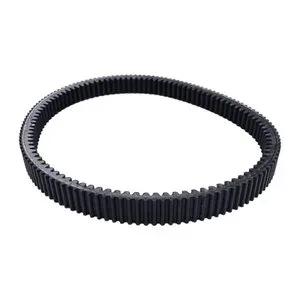
Clutch Drive Belt 3211218 for Polaris Ranger – Fleet Supply
<p><strong>Clutch Drive Belt 3211218, Aramid-reinforced HNBR compound</strong> — replacement for Polaris Ranger 1000, Ranger SP 570, and Pro XD utility platforms. Typical wear indicators include rubber glazing, edge cord fraying, and tooth profile deformation; proactive swap avoids secondary clutch sheave damage that escalates a simple belt change into a full assembly rebuild. Stocking ahead of predictable consumption keeps fleet machines field-ready across agricultural, quarry, and rental operations.</p> <ul> <li>Compatible with Ranger XP 1000, Crew 1000, SP 570 EPS, and Pro XD Mid-Size and Full-Size Gas (2020–2024)</li> <li>Operating range -20°C to +85°C, ISO 9001 production</li> <li>Replacement interval guidance and cross-reference sheet (3211218, 26C4057) supplied with shipment for long-term fleet planning</li> </ul>
Lead Time
2-5 Days
Warranty
3-12 Months
Min. Order
1 Piece
Ships To
120+ Countries
Request a Quote
Response within 24 hours
Product Details
Fleet Stocking Strategy — Replacement intervals for the 3211218 clutch drive belt mapped to Polaris Ranger and Pro XD duty cycles, keeping utility fleets operational without reactive purchasing.
Technical Specifications
| Parameter | Value |
|---|---|
| Part Number | 3211218 |
| Product Type | Belt |
| Cross-Reference | 3211218 (reference only), 26C4057 (reference only) |
| Machine Fitment | Polaris Ranger XP 1000, Ranger SP 570, Ranger Crew 1000, Ranger 1000, Ranger 530, Pro XD Mid-Size Gas, Pro XD Full-Size Gas, Pro XD 4000G, Pro XD 2000G (select years 2020–2024) |
| Condition | New Aftermarket |
| Material | Aramid-reinforced HNBR rubber compound |
| Tooth Profile | Trapezoidal |
| Dimensional Tolerance | ±0.15 mm across width and pitch length |
| Surface Hardness | 72±3 Shore A |
| Inner Fabric Treatment | Anti-static coating |
| Operating Temperature Range | -20°C to +85°C |
| Standard | ISO 9001 |
| Warranty | 6-month warranty against manufacturing defects |
| MOQ | 1 piece |
Application Suitability
| Service Interval | What to Check |
|---|---|
| 1,500–2,500 miles (heavy-duty) | Primary and secondary clutch sheave wear, belt edge fraying, tensioner condition |
| 2,500–4,000 miles (standard fleet) | Rubber glazing on belt face, tooth profile deformation, alignment verification |
| Pre-deployment (rental turnaround) | Full drivetrain inspection including belt, clutch assembly, and drive shaft coupling |
| Seasonal fleet maintenance | Stocking quantity review based on accumulated hours and upcoming operational tempo |
When the Belt Fails Before the Schedule Does
Proactive UTV drive belt maintenance prevents a consumable swap from becoming a full clutch rebuild and a recovery tow from the field.
Most utility fleets treat the clutch drive belt as a run-to-failure item. In my years watching Polaris Ranger fleets work through mining access roads and agricultural haul routes across Latin America, the pattern is consistent: a belt that could have been swapped during scheduled downtime instead snaps under load, scoring the clutch sheaves and leaving the vehicle stranded kilometers from the nearest workshop [NEED_CITE: preventive maintenance scheduling for utility vehicle fleets in remote operations]. The cost is never just the belt. It is the tow, the damaged sheaves, the secondary components, and the days of lost productivity while the machine sits waiting for parts that were never on the shelf.
For fleet managers running multiple Ranger 1000 and Pro XD units, the Clutch Drive Belt service part represents one of the most predictable consumption items in the entire drivetrain. Yet procurement often happens reactively, after the failure has already occurred and the damage has multiplied.
Where This Belt Sits in the Fleet Service Calendar
The clutch drive belt occupies a midpoint position in UTV drivetrain service intervals — more frequent than clutch assembly replacement but less routine than oil and filter changes. For Polaris Ranger and Pro XD utility vehicles operating in dust-heavy environments like quarry haul roads or mine site access tracks, the belt endures continuous thermal cycling and particulate exposure that accelerates wear beyond standard service manual estimates. Fleet maintenance planners should anchor belt replacement to operating hours and environmental conditions rather than mileage alone, building the Clutch Drive Belt service part into the same scheduled downtime window as air filter and spark plug service.
Reading the Wear Signs Before Catastrophic Failure
Belt wear follows a predictable progression that trained maintenance crews can identify well before failure occurs. Rubber glazing on the drive face indicates heat buildup and slipping — the belt is still functional but approaching end of service life. Edge cord fraying signals structural fatigue in the aramid reinforcement, and once visible, replacement should be scheduled within the next maintenance window [NEED_CITE: belt wear progression indicators for CVT drivetrains in off-road utility vehicles]. Tooth profile deformation under magnification reveals that the trapezoidal engagement surfaces have rounded off, reducing power transfer efficiency and increasing the likelihood of sudden delamination under peak load. Catching these signs during routine inspection converts an emergency repair into a planned parts swap.
What the Material Specification Means for Fleet Duty Cycles
The aramid-reinforced HNBR rubber compound used in this Clutch Drive Belt service part addresses the two primary failure modes seen in utility fleet operations: tensile rupture and thermal degradation. Aramid cord provides dimensional stability under the cyclic loading of CVT operation, resisting the stretch that causes belt slip and sheave wear. HNBR rubber maintains flexibility across the -20°C to +85°C operating range, which matters for fleets that transition between cold morning starts and sustained high-load afternoon operation. The ±0.15 mm dimensional tolerance across width and pitch length ensures consistent engagement with both primary and secondary clutch sheaves, preventing the uneven wear that shortens belt life and damages mating surfaces. Anti-static inner fabric treatment reduces particulate adhesion, a practical advantage in the dusty conditions where most Ranger and Pro XD fleets earn their keep.
The Cost of Running Belts to Failure
Fleet operators who defer UTV drive belt maintenance until breakage accumulate costs that extend far beyond the replacement belt itself. A belt that fails under load often damages the primary clutch sheave face, requiring resurfacing or full assembly replacement — a repair that takes the vehicle out of service for days rather than hours [NEED_CITE: secondary damage patterns from CVT belt failure in side-by-side utility vehicles]. In remote operational areas, the recovery logistics alone can consume an entire shift. Reactive procurement also means paying premium freight for emergency shipments rather than consolidating belt orders with regular fleet consumables. Over a multi-year fleet lifecycle, the cumulative cost of unplanned belt failures routinely exceeds what a disciplined stocking and replacement program would have required from the outset.
Why Source This Belt Through XUNPO
XUNPO produces selected part lines in-house and sources the remainder from ISO 9001-certified manufacturing partners, with both channels carrying identical QC standards and warranty terms — so fleet buyers receive consistent quality whether ordering one belt or fifty. Eight product categories under one account mean that drive belts, filters, seal kits, and clutch service items ship as a single consignment, eliminating the coordination overhead of managing multiple suppliers for one maintenance event. Minimum order starts at one piece, accommodating both emergency single-vehicle repairs and planned fleet-wide stocking orders. The Guangzhou warehouse maintains stock on high-consumption items for fast dispatch. Technical support is available to verify machine model compatibility and confirm that the correct belt variant is being supplied for specific Ranger and Pro XD model years.
Documentation & Verification
- Commercial invoice and packing list referencing belt part number and quantity per line item
- Compatibility cross-reference sheet confirming 3211218 and 26C4057 interchange (reference only)
- Dimensional inspection record verifying pitch length and width tolerance before dispatch
- Six-month warranty terms covering manufacturing defects in material and construction
- Packing photographs documenting belt condition and packaging integrity at time of shipment
- HS code and customs documentation support for international fleet supply chains
Service Interval & Stocking Guidance
- Schedule belt inspection every 500 operating hours; replace at first sign of glazing or edge fraying
- Match stocking quantity to fleet size plus a buffer for high-wear units in abrasive environments
- Store belts flat or on large-diameter hooks away from direct sunlight, ozone sources, and chemical exposure
- Rotate stock on a first-in-first-out basis to prevent shelf-age degradation of the HNBR compound
- Align belt orders with broader fleet maintenance schedules to consolidate freight and reduce per-unit logistics cost
- Document each replacement with machine hours and operating conditions to refine future interval planning
Planning Your Next Fleet Belt Order
Provide your fleet composition — model years, accumulated hours per unit, and typical operating environment — so we can recommend stocking quantities and align delivery with your next scheduled maintenance window. For mixed fleets running both Ranger 1000 and Pro XD platforms, we can cross-reference the full compatibility list to ensure coverage across every unit in service.
Frequently Asked Questions
Q: How often should the clutch drive belt be replaced under heavy-duty conditions?
A: For Polaris Ranger and Pro XD units operating in mining, quarry, or heavy agricultural environments, inspect the belt at every 500-hour service interval and plan replacement between 1,500 and 2,500 miles depending on dust exposure and load profile. Units running continuous high-load towing should trend toward the shorter end of this range, with stocking aligned to match predicted consumption across the fleet.
Q: What warning signs indicate the belt is approaching end of service life?
A: Rubber glazing on the drive face indicates heat-related slip and reduced grip. Visible edge cord fraying signals structural fatigue in the aramid reinforcement. Tooth profile rounding, detectable during close inspection, shows that engagement surfaces have worn beyond optimal geometry. Any of these signs warrants scheduling a replacement during the next available maintenance window rather than waiting for failure.
Q: Should I replace just the belt or inspect the full clutch assembly at the same time?
A: Always inspect primary and secondary clutch sheaves, the tensioner, and alignment whenever the belt is removed. If the old belt shows asymmetric wear or edge damage, sheave face scoring may already be present. Addressing sheave condition during belt replacement prevents the new belt from inheriting premature wear patterns caused by damaged mating surfaces.
Q: How many spare belts should a fleet keep on hand?
A: A practical baseline is one spare per three units in active service, adjusted upward for operations in remote areas where resupply lead times are extended. Fleet managers should review consumption records quarterly and increase buffer stock ahead of peak operational periods or deployments to areas with limited logistics access.
Q: Will this belt remain available for older Ranger and Pro XD model years?
A: XUNPO supports aftermarket supply for aging UTV platforms where OEM belt availability may be thinning. The 3211218 reference covers model years spanning 2020 through 2024 across multiple Ranger and Pro XD variants. For units outside this range, provide the machine model and year for compatibility verification against current production coverage.
Compatible Brands
Our parts are engineered to meet or exceed OEM specifications. Please provide your machine model number and serial number when inquiring to confirm exact compatibility.
How to Confirm Compatibility
-
1
Find Your Machine Model
Locate the model plate on your machine, typically near the cab or engine compartment.
-
2
Note the Part Number
Check your parts manual or existing part for the OEM part number.
-
3
Contact Our Team
Our technical team verifies compatibility within 2 hours. Send us the details via the inquiry form or WhatsApp.
Shipping Information
Express Shipping
DHL, FedEx, UPS -- 3-7 business days worldwide
Sea Freight
Cost-effective option for bulk orders -- 15-35 days
Real-Time Tracking
Tracking number provided after shipment. 24/7 support available.
Warranty Policy
All parts come with manufacturer warranty. Duration varies by product category.
- Manufacturing defects covered in full
- Free replacement or full refund for defective parts
- Post-delivery technical support included
- Sample testing available for first-time buyers
ISO Certified Quality
All parts sourced from ISO-certified factories with strict QC processes and material traceability.
Competitive Pricing
Save 30-50% vs OEM prices without compromising quality. Transparent pricing with no hidden fees.
Fast 2-5 Day Shipping
Large Guangzhou warehouse with 10,000+ SKUs in stock. Most orders ship within 2-5 business days.
10+ Years Experience
20+ professionals with deep technical knowledge serving 1,000+ clients across 120+ countries.
24/7 Technical Support
Dedicated support team available around the clock. Part verification within 2 hours of inquiry.
Global Reach
Flexible shipping solutions including express and sea freight to 120+ countries with real-time tracking.
Related Products
More parts you might need


Need a Custom Quote?
Our technical team responds within 24 hours. MOQ 1 piece. Ships to 120+ countries from our Guangzhou warehouse.