
Block & Internal Parts
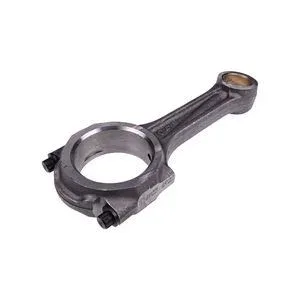
Connecting Rod 4956017 for Cummins B3.3 – Service Part
<p><strong>Connecting Rod 4956017 for Cummins B3.3 / QSB3.3, Forged 4340 Alloy Steel</strong> — compatible with Cummins B3.3 and QSB3.3 engines for scheduled overhaul and fleet-level maintenance planning.</p> <ul> <li>Inspect at service intervals for bearing clearance growth, bolt stretch, or big-end journal scoring before cascading damage occurs</li> <li>Evaluate as a matched set across all cylinders rather than single-rod replacement to maintain balanced rotating assembly tolerances</li> </ul> <p>Replacement interval guidance provided with shipment to support your B3.3/QSB3.3 fleet maintenance schedule.</p>
Lead Time
2-5 Days
Warranty
3-12 Months
Min. Order
1 Piece
Ships To
120+ Countries
Request a Quote
Response within 24 hours
Product Details
Fleet Stocking Plans — replacement intervals mapped to Cummins B3.3 and QSB3.3 rotating assembly service life, with stocking guidance for high-duty-cycle fleets.
Technical Specifications
| Parameter | Value |
|---|---|
| Part Number | 4956017 |
| Cross-Reference | 4956017 (for identification purposes) |
| Product Type | Connecting Rod |
| Machine Fitment | Cummins B3.3, QSB3.3 |
| Condition | New Aftermarket |
| Material | Forged 4340 alloy steel |
| Tensile Strength | ≥1,200 MPa |
| Big-End Bore Tolerance | ±0.005 mm |
| Heat Treatment | Tempered at 580°C, quenched in polymer medium |
| Surface Treatment | Shot-peened |
| Standards | ISO 9001 |
| Warranty | 6 months against manufacturing defects |
| MOQ | 1 piece |
Application Suitability
| Service Interval | What to Check |
|---|---|
| Mid-life overhaul (typical B3.3 rebuild window) | Big-end bore ovality, bolt stretch, crankshaft journal scoring |
| Rental turnaround between deployment cycles | Bearing clearance growth, piston pin bushing wear, rod weight balance |
| Aging machine life-extension program | Block deck condition, crankshaft grind status, previous rod replacement history |
| High-duty-cycle fleet planned maintenance | Continuous load operating hours, lube oil analysis trends, vibration signatures |
Why Planned Replacement Beats Reactive Ordering for Cummins B3.3 Rotating Assemblies
Waiting for a connecting rod to fail almost always means the crankshaft and block have already absorbed secondary damage.
In mining and quarry sites running Cummins B3.3 and QSB3.3 engines at continuous load, I have watched a single snapped rod take out the crankshaft journal, score the block bore, and scatter piston debris through the oil pan. The Connecting Rod service part for Cummins B3.3 / QSB3.3 maintenance is not a component you want to source under emergency conditions. By the time a fleet manager reacts to rod knock or bearing debris in the oil filter, the repair scope has already expanded from a scheduled rod swap to a full block inspection, crankshaft regrind, and potentially a replacement short block. [NEED_CITE: diesel engine rotating assembly failure cascade patterns in high-load applications]
Planned replacement at the correct service interval keeps the repair predictable, the parts list consolidated, and the machine downtime measured in days rather than weeks.
Where the Rod Sits in the B3.3 Service Life
The connecting rod connects the piston assembly to the crankshaft, translating combustion pressure into rotational force thousands of times per minute. Over the service life of a Cummins B3.3 or QSB3.3 engine, each rod endures cyclic loading that gradually affects its big-end bore geometry and bolt clamp retention. This Connecting Rod service part for Cummins B3.3 / QSB3.3 maintenance belongs in a planned overhaul list, not in an emergency purchase order.
Fleet operators who track engine hours and load profiles can predict when rod inspection and potential replacement should occur, typically during a mid-life in-frame overhaul before wear progression reaches a critical threshold. Scheduling the rod replacement alongside bearings, bolts, and piston service keeps the teardown efficient and avoids paying twice for the same labor.
Reading the Wear Signs Before Catastrophic Failure
Several measurable indicators signal that connecting rods should be scheduled for replacement before they fail outright. Big-end bearing clearance growth beyond specification, visible scoring on crankshaft journals, and elongated rod bolt stretch all point to a rotating assembly approaching the end of its reliable service window. [NEED_CITE: diesel engine bearing clearance monitoring practices for fleet maintenance]
When oil analysis reveals elevated copper or lead content, it often traces back to bearing wear at the rod big-end, meaning the rod bore itself may be distorting under load. Shot-peened surfaces on a replacement rod resist crack initiation at stress concentration points, which matters significantly in engines running sustained high load in quarry crushing or port material handling applications. Replacing rods as a matched set during overhaul ensures uniform weight distribution and balanced reciprocating mass across all cylinders.
Forged 4340 Steel and Heat Treatment: What the Specs Mean on Site
The forged 4340 alloy steel construction provides a tensile strength rating of at least 1,200 MPa, which directly relates to the rod’s ability to withstand peak combustion pressures without yielding. In B3.3 engines operating at altitude or under continuous load, combustion pressures generate substantial compressive and tensile stress reversals in the rod beam with every crankshaft revolution.
The heat treatment process, tempered at 580°C and quenched in a polymer medium, establishes the balance between core toughness and surface hardness that prevents brittle fracture under shock loading. The big-end bore tolerance held to ±0.005 mm ensures proper bearing crush and oil film thickness, which is the single most critical factor in preventing bearing spin and journal damage. Shot-peening introduces compressive residual stress on the rod surface, interrupting fatigue crack propagation that would otherwise initiate at forging transitions or machining marks.
The Hidden Cost of Buying One Rod After a Breakage
Reactively replacing a single rod after failure ignores the reality that the remaining rods in the engine have accumulated identical service hours and load cycles. If one rod has failed from fatigue, its counterparts are approaching the same threshold, meaning a single-rod repair often leads to another failure within a short operating window. [NEED_CITE: fatigue life correlation across matched connecting rod sets in diesel engines]
Beyond the repeat teardown cost, the secondary damage from a failed rod frequently damages the crankshaft journal beyond simple polishing, requiring regrinding or crankshaft replacement. The block bore may also sustain scoring that demands line-boring or sleeve installation, turning what could have been a planned rod swap into a major block-level repair. Fleet operators who stock a full set of rods and schedule replacement during a planned overhaul window avoid these compounding costs and keep machine availability predictable.
Why Source This Rod Through XUNPO
Our own production lines and qualified sourced supply operate under the same QC protocols and warranty terms, so you receive consistent quality whether the rod ships from our Guangzhou facility or a partner plant. The eight-category catalog means your complete overhaul list, rods, bearings, bolts, gaskets, and seal kits, ships as one consignment under one account. [NEED_CITE: aftermarket diesel engine parts quality verification standards]
Minimum order from one piece supports both single-engine emergency needs and full-fleet planned stocking programs without artificial quantity thresholds. Cross-reference verification covers superseded and alternate numbers for B3.3 and QSB3.3 variants, ensuring the rod you order matches the specific engine serial range in your fleet. Sample supply lets you confirm fitment, bore dimensions, and bolt hole alignment before committing to bulk quantities. Our technical team confirms compatibility across B3.3 build variants, addressing the serial-range differences that generic listings overlook.
Documentation & Verification
- Commercial invoice and packing list detailing rod quantities and batch traceability
- Part compatibility sheet confirming B3.3 and QSB3.3 serial range fitment with reference-only cross-reference
- Dimensional inspection record covering big-end bore, small-end bore, and center distance
- Warranty terms document specifying the 6-month manufacturing defect coverage period
- Packing photographs showing individual anti-rust protection and rigid boxing before dispatch
- HS code and customs documentation support for international clearance
Service Interval & Stocking Guidance
- Inspect connecting rods at every in-frame overhaul; replace if big-end bore exceeds ±0.005 mm tolerance or bolt stretch is detected.
- Stock one full set per engine in high-duty-cycle fleets to support planned overhauls without lead-time delays.
- Store rods in original anti-rust packaging in a dry environment; reapply protective oil if packaging is opened for inspection.
- Replace rod bolts as a matched set with every rod installation; never reuse torqued bolts from a previous service event.
Request a Maintenance Plan Quote
Share your fleet’s engine models, serial numbers, and accumulated operating hours so we can recommend replacement intervals and stocking quantities specific to your duty cycle. For machines approaching or past standard service life, we can verify long-term supply availability for your B3.3 and QSB3.3 engine builds.
Frequently Asked Questions
Q: At what operating hours should connecting rods be inspected or replaced?
A: Inspection typically aligns with the engine’s in-frame overhaul interval, which varies based on load factor and operating conditions. In high-duty-cycle applications like quarry crushing, rods should be measured for big-end bore distortion and bolt stretch at every major service event. Replacement is warranted when measurements fall outside tolerance or when fatigue indicators appear on adjacent components.
Q: Should I replace one rod or the full set across all cylinders?
A: Replacing rods as a matched set is strongly recommended for engines in continuous service. All rods accumulate identical load cycles, and replacing only the failed unit leaves the remaining rods near their fatigue threshold. A full set replacement also ensures uniform reciprocating mass, which reduces vibration and protects crankshaft bearings over the next service interval.
Q: What symptoms indicate connecting rod wear before failure occurs?
A: Early indicators include increasing big-end bearing clearance detected during oil analysis, elevated copper or lead content in lube samples, and audible knock under load that intensifies with engine speed. Crankshaft journal scoring visible through inspection ports and progressive oil pressure loss at operating temperature also suggest rod bore distortion requiring measurement and potential replacement.
Q: Can I still source replacement rods for older B3.3 engine builds?
A: Yes. We maintain cross-reference data covering superseded part numbers and serial-range variants across the B3.3 and QSB3.3 production history. Provide your engine serial number so we can verify fitment against your specific build, including older engines where original part numbers have been replaced by updated designations.
Compatible Brands
Our parts are engineered to meet or exceed OEM specifications. Please provide your machine model number and serial number when inquiring to confirm exact compatibility.
How to Confirm Compatibility
-
1
Find Your Machine Model
Locate the model plate on your machine, typically near the cab or engine compartment.
-
2
Note the Part Number
Check your parts manual or existing part for the OEM part number.
-
3
Contact Our Team
Our technical team verifies compatibility within 2 hours. Send us the details via the inquiry form or WhatsApp.
Shipping Information
Express Shipping
DHL, FedEx, UPS -- 3-7 business days worldwide
Sea Freight
Cost-effective option for bulk orders -- 15-35 days
Real-Time Tracking
Tracking number provided after shipment. 24/7 support available.
Warranty Policy
All parts come with manufacturer warranty. Duration varies by product category.
- Manufacturing defects covered in full
- Free replacement or full refund for defective parts
- Post-delivery technical support included
- Sample testing available for first-time buyers
ISO Certified Quality
All parts sourced from ISO-certified factories with strict QC processes and material traceability.
Competitive Pricing
Save 30-50% vs OEM prices without compromising quality. Transparent pricing with no hidden fees.
Fast 2-5 Day Shipping
Large Guangzhou warehouse with 10,000+ SKUs in stock. Most orders ship within 2-5 business days.
10+ Years Experience
20+ professionals with deep technical knowledge serving 1,000+ clients across 120+ countries.
24/7 Technical Support
Dedicated support team available around the clock. Part verification within 2 hours of inquiry.
Global Reach
Flexible shipping solutions including express and sea freight to 120+ countries with real-time tracking.
Related Products
More parts you might need


Block & Internal Parts
Connecting Rod Replacement for Kubota V3307 V3307T Scheduled Maintenance
View Details
Block & Internal Parts
Main Bearing 04132003 for Deutz TD D2.9 4L – Scheduled Maintenance
View Details
Block & Internal Parts
Connecting Rod J08E | Overhaul Grade for Kobelco SK260-8 SK330-8
View DetailsNeed a Custom Quote?
Our technical team responds within 24 hours. MOQ 1 piece. Ships to 120+ countries from our Guangzhou warehouse.