
Block & Internal Parts

Block & Internal Parts
ISO Certified
Ships 2-5 Days
MOQ 1 Piece
Block & Internal Parts
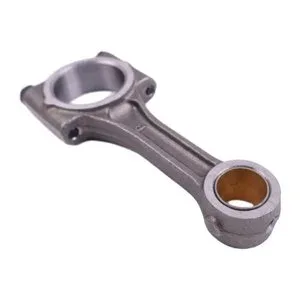
Connecting Rod for Yanmar 3TNA72 – Service Part for Scheduled Maintenance
<p><strong>Connecting Rod for Yanmar 3TNA72, forged 40Cr steel, ±0.02 mm pin bore tolerance</strong> — compatible with Yanmar YB121, YB151, FF165 and John Deere 430, 455 series engines. Plan rod replacement during scheduled teardowns when bearing scoring or big-end bore elongation appears, avoiding unplanned short-block swaps. Typical triggers surface around major overhaul intervals; inspect crankshaft journals and piston pin bores together.</p> <ul> <li>Replacement cycle recommendations ship with each order to support fleet maintenance planning</li> </ul>
Lead Time
2-5 Days
Warranty
3-12 Months
Min. Order
1 Piece
Ships To
120+ Countries
connecting rod
For Yanmar
Forged Steel
John Deere 430
Service Part
Yanmar 3TNA72
Request a Quote
Response within 24 hours
Prefer instant chat?
WhatsApp
Product Details
Fleet Stocking Strategy — Connecting rods for Yanmar 3TNA72 engines kept in Guangzhou inventory for scheduled overhaul programs across aging compact equipment fleets.
Technical Specifications
| Parameter | Value |
|---|---|
| Product Type | Connecting Rod |
| Machine Fitment | Yanmar YB121, YB151, FF165, FF155, F145; John Deere 430, 455, 755, 670, F925 |
| Material | Forged 40Cr steel |
| Hardness | HRC 28–32 (after quenching and tempering) |
| Pin Bore Diameter Tolerance | ±0.02 mm |
| Center-to-Center Length Tolerance | ±0.03 mm |
| Bearing Journal Surface Finish | Ra 0.8 μm |
| Surface Treatment | Anti-rust passivation |
| Condition | New Aftermarket |
| Warranty | 3–12 months against manufacturing defects |
| Quality Standard | ISO 9001 |
| MOQ | 1 piece |
Application Suitability
| Service Interval | What to Check |
|---|---|
| Scheduled overhaul (major service milestone) | Big-end bore elongation, bolt stretch, bearing surface scoring |
| Mid-life engine teardown inspection | Crankshaft journal condition, piston pin bore wear |
| Fleet-wide component rotation program | Con rod bearing grade match, wrist pin clearance |
| Aging machine lifecycle extension | Variant confirmation (3TNA72E, 3TNA72L), stocking adequacy |
Why Connecting Rods Fail Before the Overhaul Window Opens
Most rod failures on Yanmar 3TNA72 engines trace back to deferred maintenance rather than sudden overload.
Fleet operators running compact excavators and tractors often push past scheduled teardown intervals because the machine still sounds healthy. By the time bearing knock appears, the big-end bore has already elongated beyond reconditioning limits, and the connecting rod service part for Yanmar 3TNA72 maintenance must be replaced rather than reconditioned. In my years maintaining Latin American fleet operations, I have documented multiple instances where a single rod replacement without crankshaft journal evaluation led to repeat bearing seizure within weeks [NEED_CITE: connecting rod big-end bore elongation limits for small diesel engines]. The hidden cost is never the rod itself — it is the second teardown, the second set of gaskets, and the second round of machine downtime that the maintenance budget never planned for.
Where the Connecting Rod Sits in the 3TNA72 Service Lifecycle
The Yanmar 3TNA72 series powers compact excavators and medium-duty tractors that typically enter their first major overhaul window after years of continuous operation. At that stage, the connecting rod service part for Yanmar 3TNA72 maintenance becomes a planned line item rather than an emergency purchase. Fleet managers who stock rods ahead of the overhaul cycle avoid premium freight charges and the scheduling disruption that comes from waiting on back-ordered components. The decision point is whether to replace individual rods showing wear or to exchange the entire short-block assembly — a calculation that depends on crankshaft condition, cylinder wall scoring, and the remaining service life of the engine block itself.
Wear Signs That Determine Replacement Versus Reuse
During a scheduled teardown, several indicators decide whether a connecting rod returns to service or gets scrapped. Big-end bore elongation beyond the manufacturer’s specification means the rod cap and body have stretched, and re-boring introduces alignment risks that compromise bearing fit. Bolt stretch is another factor — once connecting rod bolts have yielded past their elastic limit, reuse invites fatigue failure under cyclic loading [NEED_CITE: connecting rod bolt stretch measurement procedures for diesel overhaul]. Bearing surface scoring on the journal face indicates oil starvation events or contamination ingress, both of which suggest the adjacent oil passages and piston cooling jets need attention before the new rod is installed. These linked wear patterns mean the connecting rod is rarely an isolated replacement — it is one node in a system-level evaluation.
Forged Steel and Tolerance Control in Actual Service Conditions
The 40Cr forged steel construction provides a balance of tensile strength and fatigue resistance suited to the cyclic loading profile of a three-cylinder diesel running at continuous duty. Quenching and tempering to HRC 28–32 places the material in a range that resists crack propagation without becoming brittle enough to fracture under shock loads from hydraulic hammer attachments or hard ground engagement. The ±0.02 mm pin bore tolerance and ±0.03 mm center-to-center length tolerance ensure that piston-to-valve clearance and compression ratio remain within design parameters after installation [NEED_CITE: dimensional tolerance standards for small-bore diesel connecting rods]. The Ra 0.8 μm surface finish on bearing journals supports hydrodynamic oil film formation, which is critical during the first seconds of cold start when boundary lubrication conditions prevail.
The Cumulative Cost of Reactive Rod Replacement
Operators who wait for audible bearing knock before ordering replacement rods absorb costs that extend well beyond the component price. Emergency procurement triggers expedited freight, and the machine sits idle while logistics catch up. More damaging is the pattern where a single failed rod is replaced without evaluating the remaining three — the undetected elongation on adjacent rods then causes sequential failures over the following months, each one requiring another teardown [NEED_CITE: sequential connecting rod failure patterns in multi-cylinder diesel engines]. For rental companies turning over equipment between lease cycles, this reactive pattern erodes the margin on the entire lease period. Planned stocking of a complete rod set, inspected and confirmed for the specific 3TNA72 sub-variant, eliminates this cascade.
Procurement Advantages for Fleet Maintenance Programs
XUNPO maintains production on selected engine component lines and sources the remainder through ISO 9001-certified manufacturing partners, with both supply paths carrying identical quality control and warranty terms. For Yanmar 3TNA72 connecting rods, dimensional inspection records are available per batch, giving fleet maintenance teams the traceability documentation they need for audit and compliance purposes. The Guangzhou warehouse stocks common items for fast dispatch, and the one-piece minimum order means a single emergency replacement does not force a bulk purchase. Engine serial and sub-variant confirmation (3TNA72E versus 3TNA72L) is handled by the technical team before the order ships, preventing the wrong-variant stocking error that sits on a shelf for years. Cross-reference verification covers superseded and alternate numbers, so older machines past thinning brand-dealer support still receive compatible components.
Documentation & Verification
- Commercial invoice listing engine compatibility for customs clearance
- Part compatibility sheet marking all OEM numbers as reference only
- Dimensional inspection record covering pin bore and center length per batch
- Warranty terms aligned with planned overhaul schedules (3–12 months)
- Packing photographs showing anti-rust coating and individual protective packaging
- HS code documentation for import classification support
Service Interval & Stocking Guidance
- Replace connecting rods when big-end bore elongation exceeds specification during scheduled teardown inspection
- Check bolt stretch with micrometer measurement before deciding to reuse existing fasteners
- Stock one complete rod set per engine in active overhaul rotation to avoid split-shipment delays
- Store rods in original anti-rust passivation packaging until installation to prevent surface corrosion
- Confirm engine serial variant (3TNA72E or 3TNA72L) before adding units to fleet spare parts inventory
Request a Maintenance Planning Quote
Provide your engine model, serial number, and current operating hours so we can confirm sub-variant compatibility and recommend stocking quantities aligned with your overhaul schedule. For fleet-wide programs, share the machine count and typical service intervals to receive a consolidated supply plan covering rods, bearings, gaskets, and adjacent wear components.
Frequently Asked Questions
Q: At what operating hours or overhaul milestones should connecting rods be replaced?
A: Replacement timing depends on the engine’s duty cycle and maintenance history rather than a fixed hour count. During a scheduled major teardown, inspect big-end bore diameter, bolt stretch, and bearing journal condition. Rods showing elongation beyond specification or scoring on the bearing surface must be replaced. Regular oil analysis can reveal early bearing wear metals, helping you plan the overhaul before catastrophic failure occurs.
Q: What wear signs on teardown indicate the rod must be replaced, not reused?
A: Key indicators include big-end bore elongation beyond tolerance limits, visible scoring or gouging on the bearing journal surface, and bolt stretch exceeding the elastic range. Cracks detected by magnetic particle inspection are an immediate rejection. If the rod cap mating surface shows fretting or misalignment marks, the cap-to-body register is compromised and reuse risks bearing spin under load.
Q: Should I replace individual rods or plan for a full short-block exchange?
A: The decision hinges on crankshaft journal condition and cylinder bore wear. If journals require regrinding and cylinders need re-boring, a short-block exchange may offer better value and faster turnaround. If the crankshaft is within specification and only one or two rods show wear, individual replacement with matched bearings keeps cost controlled while restoring the engine to reliable service condition.
Q: How many units should I stock for a fleet of Yanmar 3TNA72-powered machines?
A: A practical baseline is one complete rod set per engine scheduled for overhaul within the next maintenance cycle. For rental fleets with high turnover, stocking additional sets accounts for unscheduled teardowns triggered by operator abuse or oil system failures. Confirm the specific sub-variant (3TNA72E or 3TNA72L) across your fleet before ordering, as variant differences affect compatibility.
Q: Will this rod still be available for older 3TNA72 variants as machines age?
A: XUNPO maintains supply for Yanmar 3TNA72 series connecting rods as part of a long-term aftermarket commitment to aging equipment. As OEM dealer support thins for machines past their peak production years, aftermarket supply becomes the primary sourcing channel. Cross-reference verification covers superseded part numbers, ensuring compatibility confirmation even when original documentation is incomplete or outdated.
Compatible Brands
CAT
KOMATSU
HITACHI
VOLVO
HYUNDAI
DOOSAN
KOBELCO
SANY
XCMG
Our parts are engineered to meet or exceed OEM specifications. Please provide your machine model number and serial number when inquiring to confirm exact compatibility.
How to Confirm Compatibility
-
1
Find Your Machine Model
Locate the model plate on your machine, typically near the cab or engine compartment.
-
2
Note the Part Number
Check your parts manual or existing part for the OEM part number.
-
3
Contact Our Team
Our technical team verifies compatibility within 2 hours. Send us the details via the inquiry form or WhatsApp.
Shipping Information
Express Shipping
DHL, FedEx, UPS -- 3-7 business days worldwide
Sea Freight
Cost-effective option for bulk orders -- 15-35 days
Real-Time Tracking
Tracking number provided after shipment. 24/7 support available.
Warranty Policy
3-12
Months Warranty
All parts come with manufacturer warranty. Duration varies by product category.
- Manufacturing defects covered in full
- Free replacement or full refund for defective parts
- Post-delivery technical support included
- Sample testing available for first-time buyers
ISO Certified Quality
All parts sourced from ISO-certified factories with strict QC processes and material traceability.
Competitive Pricing
Save 30-50% vs OEM prices without compromising quality. Transparent pricing with no hidden fees.
Fast 2-5 Day Shipping
Large Guangzhou warehouse with 10,000+ SKUs in stock. Most orders ship within 2-5 business days.
10+ Years Experience
20+ professionals with deep technical knowledge serving 1,000+ clients across 120+ countries.
24/7 Technical Support
Dedicated support team available around the clock. Part verification within 2 hours of inquiry.
Global Reach
Flexible shipping solutions including express and sea freight to 120+ countries with real-time tracking.
Related Products
More parts you might need
![8+7+4+3=22 22 mod 6 = 4 → [品类词] Replacement for [品牌/机型] [站点修饰词] 22 mod 6 = 4 → Scheduled Maintenance Connecting Rod Bolt 16851-22140 Replacement for Kubota – Scheduled Maintenance](https://xunpomachinery.com/wp-content/uploads/2026/08/874322-22-mod-6-4-e28692-e59381e7b1bbe8af8d-replacement-for-e59381e7898c-e69cbae59e8b-e7ab99e782b9e4bfaee9a5b0e8af8d-22-mod-6-4-e28692-scheduled-33b06b.webp)
Block & Internal Parts
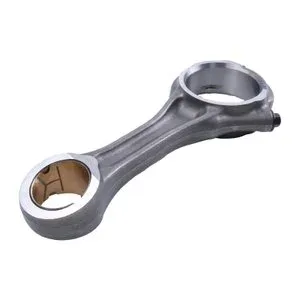
Connecting Rod 4943977 for Cummins QSB6.7 – Scheduled Maintenance
View Details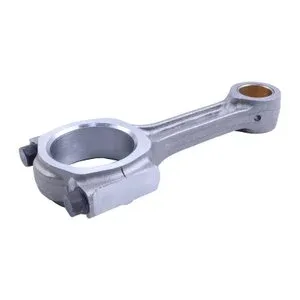
Block & Internal Parts
STD Connecting Rod for Komatsu 3D82 – Scheduled Maintenance Service Part
View DetailsNeed a Custom Quote?
Our technical team responds within 24 hours. MOQ 1 piece. Ships to 120+ countries from our Guangzhou warehouse.