

Block & Internal Parts
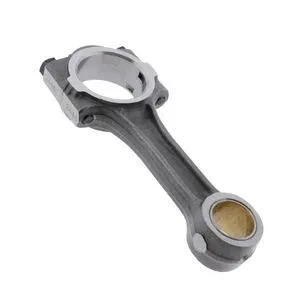
Block & Internal Parts
ISO Certified
Ships 2-5 Days
MOQ 1 Piece
Block & Internal Parts
Kubota D905-V1505 Connecting Rod – Scheduled Maintenance
<p><strong>Connecting Rod for Kubota D905, D1105, V1505 Engines</strong> — forged SAE 4340 alloy steel, shot-peened I-beam section, HRC 38–42.</p> <ul> <li>Plan replacement around major overhaul intervals; inspect big-end bore and bushing wear before deciding between single-rod or full piston-and-rod assembly exchange</li> <li>Typical wear signs include fatigue micro-cracks at the I-beam fillet and abnormal bearing shell clearance</li> <li><strong>6-month warranty</strong> against manufacturing defects; fleet maintenance schedules and replacement intervals provided with shipment</li> </ul>
Lead Time
2-5 Days
Warranty
3-12 Months
Min. Order
1 Piece
Ships To
120+ Countries
connecting rod
For Kubota
Kubota D905 V1505
SAE 4340 Steel
Service Part
Shot Peened
Request a Quote
Response within 24 hours
Prefer instant chat?
WhatsApp
Product Details
Fleet Stocking Strategy — Kubota D905–V1505 connecting rod inventory planned around mid-life overhaul intervals to prevent cascading bottom-end failures.
Technical Specifications
| Parameter | Value |
|---|---|
| Product Type | Connecting Rod |
| Machine Fitment | Kubota D905, D1105, D1005, D1305, V1205, V1305, V1405, V1505 |
| Material | Forged SAE 4340 alloy steel |
| Hardness | HRC 38–42 |
| Big-end Bore Finish | 0.4 μm Ra |
| Balance Tolerance | ±1.5 g·cm |
| Cross-section | I-beam, CNC-machined to ±0.01 mm tolerance |
| Surface Treatment | Shot-peened |
| Condition | New Aftermarket |
| Warranty | 6 months against manufacturing defects |
| MOQ | 1 piece |
| Standards | ISO 9001, ISO 6812:2019 |
Application Suitability
| Service Interval | What to Check |
|---|---|
| 4,000–6,000 hours (mid-life overhaul) | Big-end bore ovality, bolt stretch, bearing shell wear pattern |
| Major engine rebuild | Piston pin bushing clearance, crankshaft journal condition, rod alignment |
| Scheduled fleet overhaul campaign | Batch consistency across multiple engines, balance weight matching |
| Post-failure forensic inspection | Crack propagation origin, cap alignment marks, fastener torque history |
Why Connecting Rod Service Part Maintenance Replacement Cannot Wait Until Failure
A snapped rod destroys the crankshaft, block, and often the oil pan before the operator can shut down.
In Indonesian mining camps, I have watched a single unplanned connecting rod failure cascade into a full bottom-end write-off, keeping a compact excavator deadlined for weeks while the site waited for a replacement crankshaft. The connecting rod service part maintenance replacement decision is rarely made in isolation — it arrives bundled with worn bearing shells, stretched bolts, and out-of-tolerance piston pins that all demand attention at the same overhaul window. [NEED_CITE: diesel engine bottom-end overhaul planning intervals]
Fleet managers who treat the connecting rod as a reactive purchase consistently face longer machine downtime than those who include it in a scheduled teardown plan, especially across older Kubota D-series and V-series platforms where dealer support has thinned.
Where the Connecting Rod Sits in the Service Life of a Kubota D/V Engine
These engines typically reach their first major bottom-end intervention between the first and second overhaul cycle, depending on load profile and oil change discipline. The connecting rod itself is not a wear item in the conventional sense — it is a fatigue item. Micro-cracks initiate at the I-beam fillet radii or the big-end bore transition long before any visible symptom reaches the operator. Including the connecting rod in a planned overhaul kit ensures the engine returns to service with matched metallurgy across all cylinders rather than a mix of old and new.
Wear Signals That Demand Immediate Rod Inspection
Abnormal bearing shell wear patterns — particularly polished or smeared surfaces on the lower half — indicate the big-end bore has moved out of round under load. Compression irregularities between adjacent cylinders, unexplained oil pressure decay at operating temperature, and a rhythmic knock that intensifies under load all point to rod or rod-bolt degradation. [NEED_CITE: diesel engine knock diagnosis and bearing failure root cause]
When these signals appear, pulling the oil pan and measuring big-end bore diameter against the factory service limit is the minimum response. If the bore has elongated beyond tolerance, replacing the connecting rod along with matched bearing shells and new fasteners prevents the next failure from taking the crankshaft with it.
Forged SAE 4340 and Shot Peening: What They Mean for Service Life
The SAE 4340 alloy steel forging provides high fatigue strength under the alternating tensile and compressive loads each rod endures thousands of times per minute. Shot peening introduces compressive residual stress on the surface, which retards crack initiation at the most vulnerable stress-concentration points — the fillet radii where the I-beam section meets the big and small ends. The 0.4 μm Ra big-end bore finish ensures proper hydrodynamic oil film formation with the bearing shells, reducing the risk of boundary contact during high-load transient events. The ±1.5 g·cm balance tolerance prevents the secondary vibration that accelerates main bearing wear across the entire crankshaft assembly. [NEED_CITE: shot peening effect on fatigue life of forged steel connecting rods]
The Hidden Cost of Reactive Rod Procurement
When a fleet waits for a rod to fail before sourcing replacements, the damage almost never stops at the rod itself. The crankshaft journal scores, the block bore distorts, and secondary damage to the oil pump pickup and pan becomes routine. The cumulative cost of unplanned downtime — idle operators, missed project milestones, emergency freight for multiple components — far exceeds the planned acquisition cost of rods, bearings, and fasteners held in stock. [NEED_CITE: cost of unplanned equipment downtime in mining operations]
Fleets running mixed Kubota D and V engines benefit most from consolidating rod inventory, since the D1105, V1305, and adjacent variants share enough common architecture to simplify stocking decisions while still requiring individual verification before deployment.
Why Source Connecting Rods Through This Supply Channel
Selected connecting rod lines are produced in-house while the remainder comes from ISO-certified manufacturing partners — both channels carry identical QC standards and the same six-month warranty against manufacturing defects. The eight-category product scope means rods ship in the same consignment as piston assemblies, gasket sets, seal kits, and crankshaft bearings, eliminating the split-delivery problem that stalls overhaul bays. One-piece MOQ allows a single emergency replacement without forcing a bulk commitment. Compatibility verification covers engine serial variants and superseded references across the entire Kubota D905 through V1505 range. Technical support confirms balance grade and dimensional suitability before dispatch, reducing the risk of receiving rods that need rework on the bench.
Documentation & Verification
- Commercial invoice lists each rod by engine compatibility range and quantity for customs clearance.
- Part compatibility sheet cross-references Kubota engine serial breakpoints (for identification purposes only).
- Dimensional inspection record covers big-end bore, small-end bushing ID, and center-to-center length.
- Six-month warranty terms against material and manufacturing defects included with every shipment.
- Packing photographs document anti-rust coating integrity and individual box condition before crate closure.
- HS code and export documentation support provided for destination-country import procedures.
Service Interval & Stocking Guidance
- Inspect big-end bore ovality and bolt stretch at every major overhaul; replace rods showing elongation beyond service limits.
- Monitor bearing shell condition during routine oil analysis campaigns — abnormal copper or lead content flags rod bore wear.
- Stock one complete rod set per engine platform in active fleet plus individual spares for high-hour units approaching overhaul.
- Store rods in sealed, anti-rust packaging in a dry environment; inspect coating integrity before long-term shelf deployment.
- Record installation date and engine hour meter reading for each rod to build replacement history across the fleet.
Requesting a Maintenance-Ready Quotation
Provide the specific Kubota engine model, serial number, and current hour-meter reading for each unit in your overhaul pipeline. Specify whether you need individual rods or matched sets, and note any previous rebuild history that might affect bore sizing or fastener selection. This information allows the technical team to confirm compatibility, recommend complementary components such as bearing shells and piston pin bushings, and consolidate everything into a single dispatch aligned with your maintenance schedule.
Frequently Asked Questions
Q: At what operating hours should connecting rods be preventively replaced?
A: There is no universal hour threshold — it depends on load factor, oil change intervals, and whether the engine has seen previous overhauls. Rods should be measured for big-end bore ovality and center-to-center length at every major teardown. If measurements remain within service limits and no crack indications are found, reuse is acceptable. Most fleet plans schedule inspection at mid-life and replacement at the second major overhaul.
Q: What symptoms indicate a connecting rod needs immediate replacement?
A: A rhythtic knock intensifying under load, abnormal bearing shell wear showing polished or smeared surfaces, and compression variance between adjacent cylinders are primary indicators. Oil analysis revealing elevated copper or lead without corresponding main bearing wear also points to rod-bore degradation. Any of these signals warrants pulling the pan and measuring the rod directly.
Q: Should pistons and bearing shells be replaced when changing a connecting rod?
A: Best practice is to replace the piston pin bushing, bearing shells, and rod bolts whenever the rod is removed during a planned overhaul. Reusing stretched bolts or worn shells against a new rod compromises the big-end bore fitment and invites premature failure. The incremental cost of matched components is minimal compared to a repeat teardown.
Q: How many spare connecting rods should a fleet keep in stock?
A: A practical baseline is one complete set per engine platform actively running in the fleet, plus two to four individual rods as emergency stock for high-hour units. Fleets operating both D-series and V-series Kubota engines should verify which rod dimensions are shared and which are unique before consolidating inventory.
Q: Can connecting rods for older Kubota engines still be sourced reliably?
A: Yes. Aftermarket supply for the Kubota D905 through V1505 range remains active, covering both current and discontinued engine variants. Cross-reference verification confirms compatibility against engine serial numbers, including units that have been rebuilt with superseded components. Confirming serial-level fitment before ordering eliminates mismatch risk.
Compatible Brands
CAT
KOMATSU
HITACHI
VOLVO
HYUNDAI
DOOSAN
KOBELCO
SANY
XCMG
Our parts are engineered to meet or exceed OEM specifications. Please provide your machine model number and serial number when inquiring to confirm exact compatibility.
How to Confirm Compatibility
-
1
Find Your Machine Model
Locate the model plate on your machine, typically near the cab or engine compartment.
-
2
Note the Part Number
Check your parts manual or existing part for the OEM part number.
-
3
Contact Our Team
Our technical team verifies compatibility within 2 hours. Send us the details via the inquiry form or WhatsApp.
Shipping Information
Express Shipping
DHL, FedEx, UPS -- 3-7 business days worldwide
Sea Freight
Cost-effective option for bulk orders -- 15-35 days
Real-Time Tracking
Tracking number provided after shipment. 24/7 support available.
Warranty Policy
3-12
Months Warranty
All parts come with manufacturer warranty. Duration varies by product category.
- Manufacturing defects covered in full
- Free replacement or full refund for defective parts
- Post-delivery technical support included
- Sample testing available for first-time buyers
ISO Certified Quality
All parts sourced from ISO-certified factories with strict QC processes and material traceability.
Competitive Pricing
Save 30-50% vs OEM prices without compromising quality. Transparent pricing with no hidden fees.
Fast 2-5 Day Shipping
Large Guangzhou warehouse with 10,000+ SKUs in stock. Most orders ship within 2-5 business days.
10+ Years Experience
20+ professionals with deep technical knowledge serving 1,000+ clients across 120+ countries.
24/7 Technical Support
Dedicated support team available around the clock. Part verification within 2 hours of inquiry.
Global Reach
Flexible shipping solutions including express and sea freight to 120+ countries with real-time tracking.
Related Products
More parts you might need


Need a Custom Quote?
Our technical team responds within 24 hours. MOQ 1 piece. Ships to 120+ countries from our Guangzhou warehouse.