
Belt Drive Systems
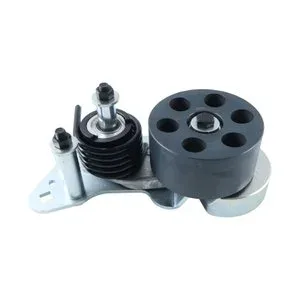
Scheduled Maintenance Compatible Belt Tensioner – Fits Bobcat S510-S850
<p><strong>7167165 7274780 7273503 Belt Tensioner Assembly</strong>, hardened steel pulley with precision-cast rocker arm, compatible with Bobcat S510–S850 and T550–T870 skid steer and compact track loaders.</p> <ul> <li>Replace at planned service intervals to prevent belt slippage, accessory drive underperformance, and cooling system strain across the fleet</li> <li>Inspect belt condition, idler pulleys, and mounting hardware (cross-reference 3GM12110, 59CM835, 53DM12) alongside tensioner swap to avoid cascade failures</li> <li>Single-assembly replacement keeps maintenance predictable for mixed fleets sharing this platform</li> </ul> <p>Replacement interval guidance and long-term supply commitment for aging Bobcat models included with every shipment.</p>
Lead Time
2-5 Days
Warranty
3-12 Months
Min. Order
1 Piece
Ships To
120+ Countries
Request a Quote
Response within 24 hours
Product Details
Fleet Stocking Strategy — A single tensioner platform covers Bobcat S510 through S850 and T-series loaders, letting fleet operators consolidate inventory across mixed machine rosters instead of carrying separate SKUs for each model generation.
Technical Specifications
| Parameter | Value |
|---|---|
| Part Number | 7167165 7274780 7273503 |
| Product Type | Belt Tensioner |
| Cross-Reference (reference only) | 7167165, 7274780, 7273503, 7196910, 7201887, 7145358, 6564692, 7152658, 53DM12, 3GM12110, 59CM835, 7CM12140, 7273604 |
| Machine Fitment | S510, S530, S550, S570, S590, S595, S630, S650, S740, S750, S770, S850, T550, T590, T595, T630, T650, T740, T750, T770, T870 |
| Brand Compatibility | Designed to replace components fitted on Bobcat skid steer and compact track loaders |
| Pulley Reference | 7167165 (cross-reference only) — hardened steel bearing |
| Rocker Arm Reference | 7274780 (cross-reference only) — precision-cast high-strength alloy |
| Spring Reference | 7145358 (cross-reference only) — consistent force over cycles |
| Hardware Included | Bolts 3GM12110, 59CM835 (cross-reference only); Nuts 53DM12 (cross-reference only) |
| Condition | New Aftermarket |
| Warranty | 3–12 months against manufacturing defects |
| Quality Standard | ISO 9001 |
Application Suitability
| Service Interval | What to Check |
|---|---|
| Major service (scheduled overhaul window) | Belt tensioner assembly free play, pulley bearing noise, rocker arm pivot wear |
| Belt replacement event | Spring tension consistency, pulley surface condition, mounting bolt torque |
| Accessory drive complaint (squeal, slip) | Full tensioner assembly swap rather than belt-only replacement |
| Pre-season fleet inspection | Wobble on pulley axis, visible spring fatigue, hardware corrosion |
| Aging machine nearing end of OEM support | Stock tensioner assemblies ahead of predictable consumption |
Why Planned Belt Tensioner Service Part Maintenance Beats Emergency Response
Replacing the tensioner before it fails protects every accessory driven by the front-end belt system.
Most fleet operators I have worked alongside on construction sites across the Yangtze River Delta only notice the belt tensioner once the belt starts throwing or squealing under load. By that point, the alternator has been undercharging, the hydraulic pump has been running at reduced efficiency, and the cooling fan has been moving less air than designed — all because a worn tensioner allowed slippage that went undetected for hundreds of operating hours. [NEED_CITE: accessory drive belt slippage effects on auxiliary system performance in compact loaders] A Bobcat S510 through S850 skid steer or T550 through T870 compact track loader that loses its belt on a jobsite does not just sit idle; the cascading effect means the machine cannot travel, cannot lift, and cannot cool its own powertrain. Planned belt tensioner service part maintenance removes that single point of failure from the schedule.
Where the Tensioner Sits in the Machine’s Service Life
The belt tensioner assembly occupies a midpoint position in the accessory drive system’s wear hierarchy. The belt itself is a consumable replaced at shorter intervals, while the pulleys and brackets typically last the life of the machine. The tensioner — comprising the pulley with its hardened steel bearing, the rocker arm cast from high-strength alloy, and the spring that maintains consistent force — degrades at a pace that falls between those extremes. Scheduling belt tensioner service part maintenance at each major service interval means the component is swapped out while it still functions, avoiding the uneven load that a failing tensioner places on adjacent parts.
Recognizing the Progression Before Catastrophic Belt Failure
Early warning signs appear in sequence. First comes a faint chirp at cold start that disappears as the belt warms. Then the chirp becomes a sustained squeal under hydraulic load. Finally, visible wobble appears on the pulley face as the bearing inside the pulley reference 7167165 (cross-reference only) develops radial play. [NEED_CITE: belt tensioner bearing wear progression indicators in skid steer loaders] Operators who track these stages can plan replacement during a scheduled downtime window. Those who wait for the belt to throw face a machine-down event that could have been prevented with a single planned component swap. For fleets running multiple Bobcat S-series and T-series models, the shared tensioner platform across S510 through S850 and T550 through T870 means stocking decisions simplify into one assembly covering a broad machine roster.
What the Component References Mean for Maintenance Planning
Each reference number within this assembly addresses a distinct wear path. The pulley reference 7167165 (cross-reference only) carries a hardened steel bearing that supports continuous rotational load; when this bearing develops play, the belt tracks unevenly and wears on one edge. The rocker arm reference 7274780 (cross-reference only) is precision-cast from high-strength alloy to resist the cyclic bending load imposed by spring tension and belt pull. The spring reference 7145358 (cross-reference only) must deliver consistent force across thousands of tension-release cycles without sagging. Hardware items including bolts 3GM12110 and 59CM835 plus nuts 53DM12 (all cross-reference only) secure the assembly to the engine front cover. Understanding these individual roles helps fleet managers decide whether a full assembly swap or a component-level replacement makes sense for their duty cycles.
The Cascade Effect of Deferred Tensioner Replacement
When a tensioner is left in service past its effective life, the damage spreads outward. The belt glazes and cracks, requiring replacement sooner than its normal interval. The alternator pulley and idler pulleys absorb the uneven loading and develop their own bearing wear. Mounting hardware fatigues under irregular vibration. [NEED_CITE: cascade wear patterns in front-end accessory drive systems of compact construction equipment] I have seen Bobcat S750 and T770 loaders come into a workshop for a simple belt change, only for the technician to find that the worn tensioner had already damaged the belt routing path enough to require a full front-end accessory drive inspection. The cost of a planned tensioner swap is minor compared to the cumulative downtime of chasing each downstream failure separately.
What It Costs to Skip the Planned Replacement Window
Fleet operators who treat the tensioner as a run-to-failure part accumulate hidden costs across their machine roster. A Bobcat S650 that throws a belt on a concrete pour halts not just that machine but the entire workflow dependent on it. The same fleet running a planned belt tensioner service part maintenance program replaces the assembly during scheduled service, absorbing the component cost within an existing labor window. [NEED_CITE: unplanned downtime cost impact on compact loader fleet operations in construction] Over multiple machines and multiple service cycles, the difference between reactive and planned replacement becomes one of the most controllable variables in fleet maintenance spending.
What We Bring to Your Maintenance Program
Self-produced lines and qualified sourced supply carry identical QC and warranty terms, so you order from one account with one standard of accountability. Eight product categories — engine, hydraulic, electrical, undercarriage, cabin, seal kits, tools, and general spares — mean a complete service job list ships as one consignment, eliminating split freight on belt tensioners, filters, and seal kits ordered separately. Minimum order is one piece, which matters when a single machine in your fleet is due for its tensioner interval. Cross-reference verification covers superseded and alternate numbers, so older Bobcat loaders with updated part histories still get correct matches. Sample supply is available for fitment confirmation before you commit to bulk stocking across your fleet.
Documentation & Verification
- Commercial invoice and packing list referencing each tensioner assembly line item and quantity
- Part compatibility and cross-reference sheet mapping OEM references (reference only) to Bobcat S-series and T-series models
- Quality inspection record covering pulley bearing play, spring tension, and rocker arm dimensional check
- Warranty terms document specifying coverage period against manufacturing defects
- Packing photographs showing assembly condition and hardware completeness before crate closure
- HS code and customs documentation support for cross-border fleet supply shipments
Service Interval & Stocking Guidance
- Replace belt tensioner assembly at each major service interval or when pulley bearing play becomes detectable by hand
- Inspect spring reference 7145358 (cross-reference only) for loss of tension force during every belt change event
- Stock one tensioner assembly per five machines in mixed Bobcat S-series and T-series fleets as a baseline reserve
- Store assemblies in dry, temperature-stable conditions to prevent spring corrosion and bearing seal degradation
- Align stocking quantities with your fleet’s annual operating hours and scheduled service cadence
Tell Us About Your Fleet
Provide your machine models, approximate operating hours, and current service schedule cadence so we can recommend stocking quantities and replacement timing that match your actual duty cycle. If you are transitioning from reactive to planned maintenance, share which models have experienced belt drive failures and we will map the cross-reference coverage. For aging loaders approaching or past standard support windows, confirm serial numbers so we can verify long-term availability.
Frequently Asked Questions
Q: How often should the belt tensioner be replaced on a Bobcat skid steer or track loader?
A: Replacement timing depends on operating hours and duty cycle rather than a fixed calendar interval. Most fleet programs align the tensioner swap with major service windows, inspecting pulley bearing play and spring force at each event. Machines in high-load applications such as quarrying or continuous material handling may need earlier attention. We recommend checking the assembly at every belt change and planning replacement when any wobble or noise appears.
Q: What symptoms indicate the tensioner is failing before it causes belt or accessory damage?
A: The earliest sign is a chirp at cold start that fades as components warm. Sustained squealing under hydraulic load follows, then visible pulley wobble as the bearing develops radial play. If you observe belt edge wear concentrated on one side, the tensioner pulley is likely no longer tracking true. Catching these stages early lets you schedule replacement during planned downtime instead of reacting to a belt throw on the jobsite.
Q: Should I replace the full tensioner assembly or just the pulley and spring individually?
A: For machines with moderate hours, replacing individual components can extend service cost-effectively. For higher-hour machines or fleets simplifying their maintenance workflow, swapping the complete assembly — pulley, rocker arm, spring, and hardware — removes variability and ensures matched wear across all tensioner elements. The decision often comes down to whether your workshop prefers component-level rebuilds or scheduled assembly exchanges.
Q: How many tensioner assemblies should a fleet operator keep in stock?
A: A practical starting point is one assembly per five machines sharing the Bobcat S-series or T-series platform, adjusted upward for high-utilization fleets or remote jobsites where supply lead times are longer. Since this tensioner fits models from S510 through S850 and T550 through T870, a single SKU covers a broad machine roster, reducing the total stock investment compared to carrying separate part numbers per model.
Q: Can this tensioner still be sourced for older Bobcat models past OEM support?
A: Yes. The cross-reference numbers covered by this assembly span multiple superseded and alternate references, supporting loaders that remain in active service well beyond their original support window. For aging S-series and T-series machines, securing a reliable aftermarket supply channel for the belt tensioner service part maintenance program is often more practical than depending on diminishing OEM inventory availability.
Compatible Brands
Our parts are engineered to meet or exceed OEM specifications. Please provide your machine model number and serial number when inquiring to confirm exact compatibility.
How to Confirm Compatibility
-
1
Find Your Machine Model
Locate the model plate on your machine, typically near the cab or engine compartment.
-
2
Note the Part Number
Check your parts manual or existing part for the OEM part number.
-
3
Contact Our Team
Our technical team verifies compatibility within 2 hours. Send us the details via the inquiry form or WhatsApp.
Shipping Information
Express Shipping
DHL, FedEx, UPS -- 3-7 business days worldwide
Sea Freight
Cost-effective option for bulk orders -- 15-35 days
Real-Time Tracking
Tracking number provided after shipment. 24/7 support available.
Warranty Policy
All parts come with manufacturer warranty. Duration varies by product category.
- Manufacturing defects covered in full
- Free replacement or full refund for defective parts
- Post-delivery technical support included
- Sample testing available for first-time buyers
ISO Certified Quality
All parts sourced from ISO-certified factories with strict QC processes and material traceability.
Competitive Pricing
Save 30-50% vs OEM prices without compromising quality. Transparent pricing with no hidden fees.
Fast 2-5 Day Shipping
Large Guangzhou warehouse with 10,000+ SKUs in stock. Most orders ship within 2-5 business days.
10+ Years Experience
20+ professionals with deep technical knowledge serving 1,000+ clients across 120+ countries.
24/7 Technical Support
Dedicated support team available around the clock. Part verification within 2 hours of inquiry.
Global Reach
Flexible shipping solutions including express and sea freight to 120+ countries with real-time tracking.
Related Products
More parts you might need

Need a Custom Quote?
Our technical team responds within 24 hours. MOQ 1 piece. Ships to 120+ countries from our Guangzhou warehouse.