
Belt Drive Systems
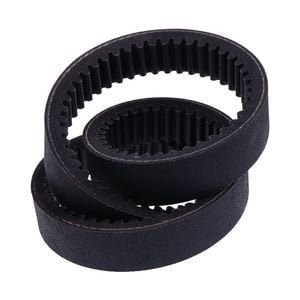
Transaxle Variation Belt for Husqvarna & Ariens Lawn Tractors – Service Part
<p><strong>Transaxle Variation Belt 587086101, Aramid Tensile Cord, EPDM Compound</strong> — replacement for Husqvarna and Ariens lawn tractor hydrostatic drive systems.</p> <ul> <li>Replace proactively when edge glazing, slippage under load, or speed fluctuation appears to prevent secondary transmission seal and pulley damage. Aramid cords with EPDM rubber maintain stability across seasonal temperature swings (–20°C to +90°C).</li> <li>Compatible with Husqvarna models 917.289081, 917250830, 917203780 series and Ariens 936048–936095 series, transmission models 580486201 and 582491201.</li> <li>Recommended replacement interval guidance ships with every order to support your fleet maintenance planning.</li> </ul>
Lead Time
2-5 Days
Warranty
3-12 Months
Min. Order
1 Piece
Ships To
120+ Countries
Request a Quote
Response within 24 hours
Product Details
Fleet Stocking Ready — Aramid-cord transaxle variation belt kept in Guangzhou inventory for planned seasonal replenishment across Husqvarna and Ariens mower fleets.
Technical Specifications
| Parameter | Value |
|---|---|
| Part Number | 587086101, 532426740, 580486301, 584973901, 21548469, 21548408, 21549005, 587884401, 587884501, 426740, GT 37401, GT37401 |
| Product Type | Belt |
| Cross-Reference (reference only) | 587086101, 532426740, 580486301, 584973901, 21548469, 21548408, 21549005, 587884401, 587884501, 426740, GT 37401, GT37401 |
| Machine Fitment | Husqvarna: 917.289081, 917250830, 917203780, 917203850, 917203910, 917203920, 917203930, 917253790, 917253792, 917289080; Transmission models 580486201 (2014–06), 582491201 (2017–12). Ariens: 936048, 936049, 936073, 936074, 936075, 936076, 936077, 936083, 936084, 936085, 936086, 936089, 936095, RS800-SD-F, RS800-SD-P |
| Tensile Cord Material | Aramid |
| Rubber Compound | EPDM |
| Operating Temperature Range | –20°C to +90°C |
| Profile | Trapezoidal |
| Condition | New Aftermarket |
| Standards | ISO 9001, ISO 4184, SAE J1490 |
| Warranty | 3–12 months against manufacturing defects |
| MOQ | 1 piece |
Application Suitability
| Service Interval | What to Check |
|---|---|
| Annual pre-season inspection | Edge glazing, sidewall cracking, and loss of trapezoidal profile definition |
| 250–400 operating hours (commercial mowing) | Slippage under load, speed fluctuation on inclines or wet grass |
| Post-winter storage recommissioning | Belt seating in pulley grooves, tensioner spring return force |
| Transmission service (fluid or filter change) | Pulley bore wear, idler bearing play, tensioner arm pivot condition |
| End-of-season fleet audit | Remaining belt cross-section depth, heat discoloration on cord surface |
Why Planned Replacement Beats Running a Belt to Failure
A transaxle variation belt that snaps mid-season takes the hydrostatic drive down with it — and the repair bill climbs well past the belt itself.
I have watched too many lawn tractor transmissions come into the shop with scorched pulley faces and damaged input seals, all traceable to a belt that was left in service until it shredded. The belt is the cheapest item in that drive system, yet its failure triggers the most expensive cascade. Fleet operators running Husqvarna and Ariens units through HOA contracts or municipal park rotations rarely have the luxury of waiting for a diagnosis when peak mowing weeks are burning away. [NEED_CITE: hydrostatic transmission damage patterns linked to belt degradation in lawn tractors]
Scheduling a transaxle variation belt service part replacement ahead of observable failure is not conservative — it is the difference between a fifteen-minute swap on a scheduled maintenance day and a full transmission teardown during the busiest week of the season.
Where This Belt Sits in the Machine Service Life
The transaxle variation belt connects the engine output to the hydrostatic pump input in Husqvarna and Ariens lawn tractors. It operates under continuous variable loading as the operator modulates ground speed, meaning the belt experiences cyclical tension spikes far beyond simple on-off engagement. Over a typical commercial mowing season, this component endures thousands of tension cycles per operating hour.
Unlike a deck blade drive belt that either turns or does not, the variation belt must maintain precise friction across its trapezoidal profile to modulate transmission response. As the EPDM compound hardens with thermal cycling and the Aramid tensile cords stretch microscopically, the belt loses its ability to hold consistent grip on the variable-diameter pulleys. This is the transaxle variation belt service part wear pattern that precedes outright failure — and it is entirely predictable if the fleet maintenance schedule accounts for it.
Recognizing the Wear Progression Before It Becomes a Breakdown
The earliest indicator is usually speed hesitation during uphill operation or when cutting wet, heavy grass. The operator notices the tractor surging slightly rather than maintaining steady ground speed. This is the belt beginning to slip on the drive pulley under increased torque demand. [NEED_CITE: belt slippage symptoms in hydrostatic lawn tractor drive systems]
As wear progresses, the trapezoidal sidewalls develop a glazed surface that reduces friction further. You may notice a faint rubber-burn smell after extended heavy-load mowing, or observe fine black dust accumulating beneath the belt guard. By the time visible cracking appears on the belt back or edges, the component is well past its reliable service window.
Secondary damage follows a consistent pattern: a slipping belt generates excess heat that accelerates pulley groove wear and degrades the transmission input seal. I have seen fleets replace only the belt, only to have the new belt fail prematurely because the glazed pulleys and weakened tensioner were never addressed.
Aramid Cords and EPDM Compound Under Seasonal Thermal Stress
The Aramid tensile cord specification matters because this belt operates in an environment where ambient temperature swings from early-morning cool to midday heat radiating off the transmission housing. Aramid maintains dimensional stability across that range, resisting the stretch that polyester cords develop after repeated thermal cycling. For fleet operators whose Husqvarna or Ariens units run six or more hours daily through summer months, this stability directly determines whether the transaxle variation belt service part maintains consistent drive response or begins slipping by mid-season.
The EPDM rubber compound is selected for its resistance to heat aging and ozone exposure — both constant factors in an open-belt drive mounted above a hot hydrostatic transmission. Unlike natural rubber compounds that harden and crack within a single season of commercial use, EPDM retains flexibility across the stated –20°C to +90°C operating window. This is relevant not only during summer mowing but also for units stored in unheated sheds over winter, where a brittle belt will crack the moment the tensioner engages on spring startup.
The trapezoidal profile is precision-molded to match the variable-diameter pulley grooves on compatible Husqvarna and Ariens transmissions. Profile accuracy determines how evenly the belt seats under load — a belt that rides high in the groove will wear the pulley edges and generate vibration that transfers through the entire drive system.
The Cumulative Cost of Reactive Procurement
Fleet operators who procure transaxle belts only after failure accumulate downtime in ways that are difficult to quantify on a single repair order but devastating across a season. A downed mower during peak growth weeks means either rescheduling client properties or running a backup unit that may not be configured for the same cutting width. [NEED_CITE: equipment downtime cost impact on commercial mowing contractors]
Beyond the immediate schedule disruption, reactive procurement often forces operators to accept whatever belt is available rather than verifying cross-reference compatibility across the full range of superseded part numbers. The Husqvarna and Ariens transmission models covered by this belt span production years where part numbers were revised multiple times — ordering by memory or an outdated cross-reference table risks receiving a belt that physically fits but does not match the pulley geometry for that specific transmission variant.
The compounding effect is measurable in fleet maintenance records: units that receive planned belt replacements show noticeably fewer secondary transmission repairs and longer intervals between pulley and tensioner overhauls.
Procurement Advantages for Fleet-Level Buyers
Our Guangzhou facility maintains inventory of this transaxle variation belt across all listed cross-reference numbers, so whether your fleet runs older Husqvarna models referencing 532426740 (cross-reference only) or newer units requiring 587086101 (cross-reference only), a single order covers the entire fleet. Minimum order is one piece, but fleet buyers benefit from consolidated dispatch when stocking ahead of the mowing season.
We produce selected belt lines in-house and source the remainder from ISO-certified manufacturing partners — both channels carry identical QC standards and warranty terms. Our technical team verifies cross-reference accuracy across superseded and alternate numbers before confirming compatibility, reducing the risk of receiving a dimensionally similar but functionally incorrect belt.
Part identification is supported from a part number, machine model listing, photograph of the old belt, or a nameplate image — whatever is available at the point of ordering. Sample supply is available for fitment confirmation before bulk commitment, which is particularly useful when onboarding a mixed-age fleet where transmission serial ranges span multiple production periods.
Documentation & Verification
- Commercial invoice listing all cross-reference numbers and compatible Husqvarna and Ariens machine models per line item
- Compatibility and cross-reference sheet mapping superseded numbers to current production variants
- Dimensional inspection record confirming trapezoidal profile and belt length against specification
- Warranty terms document covering manufacturing defects for the stated warranty period
- Packing photographs showing belt coiling method and protective wrapping before crate closure
- HS code and customs documentation support for international fleet parts shipments
Service Interval & Stocking Guidance
- Schedule replacement every 250–400 commercial operating hours or at each annual pre-season service, whichever comes first
- Inspect pulley grooves for glazing and idler bearings for play whenever the transaxle variation belt is removed
- Stock one spare belt per active unit for single-season coverage; two per unit if operating across extended seasons
- Store spare belts flat or loosely coiled in a cool, dark, dry location away from ozone sources such as electric motors
- Avoid hanging belts on hooks during storage — concentrated bending stress creates permanent deformation at the contact point
- Rotate stock using first-in-first-out discipline to prevent compound aging before installation
Requesting a Fleet Stocking Proposal
Provide your Husqvarna and Ariens machine model list along with approximate annual operating hours per unit, and we will map the correct cross-reference numbers to each transmission variant in your fleet. If you are uncertain about transmission serial ranges, a photograph of each machine nameplate is sufficient for our team to confirm compatibility and recommend stocking quantities aligned with your mowing season calendar.
Frequently Asked Questions
Q: How often should the transaxle variation belt be replaced under normal commercial use?
A: For commercial mowing contractors running Husqvarna or Ariens lawn tractors five to six days per week, replacement every 250–400 operating hours is a practical baseline. Units operating in high-temperature conditions or cutting heavy, wet grass daily may reach the wear threshold sooner. Annual pre-season replacement regardless of hours ensures the EPDM compound has not degraded during winter storage.
Q: What symptoms indicate the belt is nearing end of service life?
A: Early signs include speed fluctuation during uphill travel or wet-grass operation, a faint rubber odor after extended load, and visible glazing on the belt sidewalls. Fine black dust beneath the belt guard indicates compound breakdown. By the time visible cracks appear on the belt back, the component has exceeded its reliable service window and should be replaced immediately.
Q: Should pulleys and tensioners be replaced at the same time as the belt?
A: Not necessarily every time, but they should always be inspected when the belt is removed. Pulley grooves that show glazing or edge wear will accelerate the new belt’s degradation. A tensioner arm with worn pivot bushings or a weakened spring cannot maintain correct engagement force. Addressing these components during belt replacement prevents premature failure of the new belt.
Q: How many spare belts should a fleet operator keep on hand per season?
A: One spare per active unit covers typical single-season consumption for planned maintenance. If your fleet operates across an extended season or serves properties with demanding terrain that increases belt load, stocking two per unit provides a buffer for both planned replacement and an unexpected failure without requiring emergency procurement.
Q: Are replacement belts still available for older Husqvarna and Ariens models past brand support?
A: Yes. This belt covers transmission models spanning multiple production years, including superseded part numbers. Our cross-reference verification maps older identifiers to the current production specification. Provide your machine model or a nameplate photograph, and we will confirm whether the current belt variant matches your specific transmission serial range.
Compatible Brands
Our parts are engineered to meet or exceed OEM specifications. Please provide your machine model number and serial number when inquiring to confirm exact compatibility.
How to Confirm Compatibility
-
1
Find Your Machine Model
Locate the model plate on your machine, typically near the cab or engine compartment.
-
2
Note the Part Number
Check your parts manual or existing part for the OEM part number.
-
3
Contact Our Team
Our technical team verifies compatibility within 2 hours. Send us the details via the inquiry form or WhatsApp.
Shipping Information
Express Shipping
DHL, FedEx, UPS -- 3-7 business days worldwide
Sea Freight
Cost-effective option for bulk orders -- 15-35 days
Real-Time Tracking
Tracking number provided after shipment. 24/7 support available.
Warranty Policy
All parts come with manufacturer warranty. Duration varies by product category.
- Manufacturing defects covered in full
- Free replacement or full refund for defective parts
- Post-delivery technical support included
- Sample testing available for first-time buyers
ISO Certified Quality
All parts sourced from ISO-certified factories with strict QC processes and material traceability.
Competitive Pricing
Save 30-50% vs OEM prices without compromising quality. Transparent pricing with no hidden fees.
Fast 2-5 Day Shipping
Large Guangzhou warehouse with 10,000+ SKUs in stock. Most orders ship within 2-5 business days.
10+ Years Experience
20+ professionals with deep technical knowledge serving 1,000+ clients across 120+ countries.
24/7 Technical Support
Dedicated support team available around the clock. Part verification within 2 hours of inquiry.
Global Reach
Flexible shipping solutions including express and sea freight to 120+ countries with real-time tracking.
Related Products
More parts you might need


Need a Custom Quote?
Our technical team responds within 24 hours. MOQ 1 piece. Ships to 120+ countries from our Guangzhou warehouse.