
Engine Auxiliary Components
Engine Auxiliary Components
ISO Certified
Ships 2-5 Days
MOQ 1 Piece
Engine Auxiliary Components
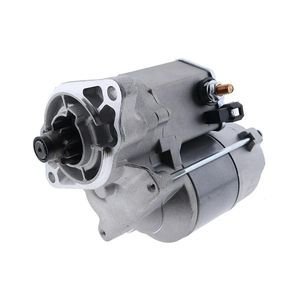
Wear Item Starter Motor 19269-63013 Compatible with Kubota D902
<p><strong>19269-63013 Starter Motor, 12V 9T</strong> — compatible with Kubota D902/D950 engine-powered excavators and tractors including KX41-3, KH61, BX24, R310. Slower cranking speed and rising current draw signal approaching end of service life, making proactive replacement planning essential to avoid unplanned fleet downtime. Inspect the flywheel ring gear and battery circuit alongside single-component swap to address root cause rather than symptom alone.</p> <ul> <li>Supports continued lifecycle planning for aging Kubota models past peak brand-channel availability</li> </ul>
Lead Time
2-5 Days
Warranty
3-12 Months
Min. Order
1 Piece
Ships To
120+ Countries
12V starter
19269-63013
For Kubota
Kubota D902
Service Part
starter motor
Request a Quote
Response within 24 hours
Prefer instant chat?
WhatsApp
Product Details
Fleet Stocking Plan — Starter motor replacement intervals mapped to D902 engine hours across mixed Kubota fleets.
Technical Specifications
| Parameter | Value |
|---|---|
| Part Number | 19269-63013 |
| Cross-Reference | 19269-63013 (reference only) |
| Machine Fitment | KX41-3, KH61, KX41, KX71-3, KX71H, KH41, BX2230D, BX2350D, BX2360, BX24, BX25, R310, D850-B1, BX1500D, BX1800D, BX1830D, BX1850D, BX1860D |
| Voltage | 12V |
| Pinion Teeth | 9T |
| Torque Output | ≥1.8 N·m at 12V |
| Pull-in Voltage | 9.6V min |
| Pinion Gear Hardness | 58–62 HRC |
| Armature Insulation Class | Class H (180°C rating) |
| Operating Temperature Range | -15°C to +55°C |
| Cold-cranking Test | -20°C validated |
| Durability Validation | 500-cycle bench test |
Application Suitability
| Service Interval | What to Check |
|---|---|
| Every 2,000 operating hours | Starter cranking speed and current draw baseline |
| Seasonal agricultural shutdown | Battery health and flywheel ring gear tooth condition |
| Post-overhaul recommissioning | Full starting circuit continuity and engagement depth |
| Every 5,000 operating hours | Complete starter removal, brush length and commutator inspection |
| Before winter storage | Cold-cranking voltage drop across solenoid and cables |
Why Kubota D902 Fleets Lose Days to Starter Failures That Were Predictable
A 12V starter motor service part for Kubota D902 maintenance belongs on the shelf before the first slow-crank warning appears.
Reactive procurement after a starter failure means the excavator or tractor sits idle while the part is sourced and shipped. In Central Asian mining operations, that idle window stretches into days, sometimes weeks, while the fleet schedule unravels and the rental meter keeps running on equipment that cannot earn its keep [NEED_CITE: equipment downtime cost analysis for compact excavator fleets]. The problem compounds when the failed starter has been grinding against the flywheel ring gear during repeated unsuccessful cranking attempts, turning a single-component replacement into a flywheel inspection job. Fleet managers who treat starter motors as unpredictable emergencies consistently overpay in logistics premiums and missed project milestones compared to those who build them into scheduled preventive maintenance windows.
Where the Starter Sits in the D902 Service Lifecycle
The 12V starter motor service part for Kubota D902 maintenance occupies a specific position in the engine’s wear progression curve. Unlike injectors or piston rings that degrade gradually and visibly through smoke or power loss, starter motors tend to mask their decline until brush wear crosses a threshold or the solenoid contacts pit beyond reliable conduction. Planning replacement around major service intervals — typically aligned with engine overhaul milestones or seasonal fleet stand-downs — keeps the machine available during peak utilization periods rather than pulling it offline mid-project.
Wear Signals That Tell You the Replacement Window Is Open
Slower cranking speed in the morning, particularly when ambient temperature drops, is the earliest reliable indicator that the starter motor is approaching its service limit. Increased current draw measured at the battery terminal during cranking points to internal resistance building in the armature windings or brush contact surfaces [NEED_CITE: starter motor diagnostic current draw thresholds for 12V diesel applications]. When the pull-in voltage requirement climbs above the solenoid’s comfortable engagement margin, the pinion gear may partially engage and chatter against the flywheel teeth, accelerating wear on both components simultaneously. Catching these signals during routine operational checks allows procurement lead time to absorb into planned maintenance rather than triggering emergency sourcing.
Reading the Specs That Matter for Fleet Planning
The 9-tooth pinion configuration must match the flywheel ring gear pitch exactly — a mismatch means the gear either refuses to engage or strips teeth on first cranking attempt. Pinion gear hardness between 58 and 62 HRC provides the wear resistance needed for hundreds of engagement cycles without becoming brittle enough to chip under shock loading in cold conditions. Class H armature insulation rated to 180°C matters because high-duty-cycle equipment in quarries and demolition zones generates sustained thermal load in the starter housing, particularly when machines are restarted frequently during short work pauses. The 500-cycle durability validation establishes a baseline for estimating replacement intervals across fleet units that share similar operating patterns.
The Hidden Cost of Treating Starters as Unplanned Failures
Fleets that manage starter motors reactively accumulate compounding losses that go far beyond the component cost. The machine sits idle during the procurement and shipping window. The flywheel ring gear accumulates damage from partial engagement events that occurred during failed cranking attempts in the days before the starter fully died. Adjacent starting circuit components — battery cables, solenoid wiring, ignition switch contacts — often get replaced as speculative fixes when the root cause was the starter itself [NEED_CITE: electrical system diagnostic misidentification patterns in compact diesel equipment]. Across a fleet of twenty Kubota machines, the difference between planned and reactive starter management represents a meaningful portion of annual maintenance budget variance.
What Makes This Source Work for Fleet Maintenance Planning
Stocking from a single account covering all eight equipment categories means the starter motor ships alongside the seal kits, filters, and gaskets already on your service schedule rather than arriving as a separate consignment with separate freight charges. Part identification from machine model alone works when nameplates have been painted over or worn away in quarry dust — send a photograph and the correct reference gets confirmed. Minimum order of one piece means you can validate fitment on a single machine before committing to fleet-quantity stocking. The Guangzhou warehouse holds stock on fast-moving items, which shortens the gap between deciding to stock and having the part on your shelf. Technical support confirms engine serial variant compatibility so that a D902 unit does not accidentally receive a starter configured for a different engagement depth.
Documentation & Verification
- Commercial invoice listing starter motor part references and engine compatibility declarations
- Cross-reference sheet mapping 19269-63013 (reference only) to superseded and alternate numbers
- Dimensional inspection record confirming pinion gear tooth count and mounting flange pattern
- Warranty terms covering manufacturing defects for the stated coverage period
- Packing photographs documenting condition before crate closure
- HS code assignment and customs documentation for international fleet supply chains
Service Interval & Stocking Guidance
- Schedule starter inspection at each major service interval; replace when brush length reaches wear limit
- Monitor morning cranking speed as the primary indicator of approaching end-of-service condition
- Stock one spare starter per five fleet units operating in high-duty-cycle environments
- Store in dry conditions with desiccant; armature insulation degrades in sustained high humidity
- Rotate shelf stock periodically; verify solenoid function before installing long-stored units
- Bundle starter orders with scheduled filter and seal kit replenishment to consolidate freight
Requesting a Fleet Supply Proposal
Provide your fleet composition — which Kubota excavator and tractor models are running D902 or D950 engines — along with current operating hours and your standard service interval schedule. We will map the starter motor replacement windows against your maintenance calendar and suggest stocking quantities that cover predictable consumption without over-committing shelf space. If your fleet includes older Kubota models approaching the edge of brand-channel support, mention those specifically so supply continuity can be confirmed for your planning horizon.
Frequently Asked Questions
Q: How often should a starter motor be replaced in high-duty-cycle Kubota equipment?
A: Replacement timing depends on start-stop frequency and operating environment rather than a fixed hour interval. Equipment in demolition and quarry applications with dozens of daily restarts reaches starter wear limits sooner than machines running continuous shifts. Monitor cranking speed degradation and current draw increase as primary indicators, then plan replacement at the next scheduled service window.
Q: What symptoms indicate the starter is approaching end of service life?
A: Slower cranking speed, particularly during cold starts, signals increasing internal resistance in the armature or brush contacts. Intermittent engagement failures where the solenoid clicks but the pinion does not fully seat suggest contact pitting. Grinding noises during cranking indicate partial pinion engagement damaging the flywheel ring gear. Any of these symptoms warrants inspection and planned replacement.
Q: Should I replace just the starter or inspect the entire starting circuit?
A: A failing starter often masks underlying issues in the battery, cables, and flywheel ring gear. When replacing the starter, inspect the flywheel teeth for chipping or wear from partial engagement events. Verify battery cranking amperage and cable voltage drop. Addressing only the starter while ignoring circuit degradation leads to early failure of the replacement unit.
Q: How many spare starters should a fleet of Kubota machines keep in stock?
A: A practical baseline is one starter per five machines operating in high-duty-cycle conditions, adjusted upward for remote sites where emergency procurement takes longer. Fleet managers with mixed equipment ages should stock additional units for older models where supply continuity is less certain. Align stocking decisions with your preventive maintenance calendar.
Q: Can I still get starter motors for older Kubota models past peak brand support?
A: Aftermarket supply chains maintain production for starter motors serving older Kubota engines long after brand-channel availability thins. When planning long-term fleet maintenance, confirm supply commitment for your specific engine variants and serial ranges. Securing a reliable source now prevents reactive sourcing challenges when your older units eventually need replacement starters.
Compatible Brands
CAT
KOMATSU
HITACHI
VOLVO
HYUNDAI
DOOSAN
KOBELCO
SANY
XCMG
Our parts are engineered to meet or exceed OEM specifications. Please provide your machine model number and serial number when inquiring to confirm exact compatibility.
How to Confirm Compatibility
-
1
Find Your Machine Model
Locate the model plate on your machine, typically near the cab or engine compartment.
-
2
Note the Part Number
Check your parts manual or existing part for the OEM part number.
-
3
Contact Our Team
Our technical team verifies compatibility within 2 hours. Send us the details via the inquiry form or WhatsApp.
Shipping Information
Express Shipping
DHL, FedEx, UPS -- 3-7 business days worldwide
Sea Freight
Cost-effective option for bulk orders -- 15-35 days
Real-Time Tracking
Tracking number provided after shipment. 24/7 support available.
Warranty Policy
3-12
Months Warranty
All parts come with manufacturer warranty. Duration varies by product category.
- Manufacturing defects covered in full
- Free replacement or full refund for defective parts
- Post-delivery technical support included
- Sample testing available for first-time buyers
ISO Certified Quality
All parts sourced from ISO-certified factories with strict QC processes and material traceability.
Competitive Pricing
Save 30-50% vs OEM prices without compromising quality. Transparent pricing with no hidden fees.
Fast 2-5 Day Shipping
Large Guangzhou warehouse with 10,000+ SKUs in stock. Most orders ship within 2-5 business days.
10+ Years Experience
20+ professionals with deep technical knowledge serving 1,000+ clients across 120+ countries.
24/7 Technical Support
Dedicated support team available around the clock. Part verification within 2 hours of inquiry.
Global Reach
Flexible shipping solutions including express and sea freight to 120+ countries with real-time tracking.
Related Products
More parts you might need

Engine Auxiliary Components
Recoil Starter 150-481 695058 – Scheduled Maintenance for Briggs & Stratton
View Details
Engine Auxiliary Components
12V 2.0kW starter motor 45-2323 for Thermo King SB/SL series – direct replacement
View Details
Engine Auxiliary Components
12V Pull Solenoid P610-B1V12 | Fleet Supply for Engine Excavator Loader Bulldozer Tractor
View DetailsNeed a Custom Quote?
Our technical team responds within 24 hours. MOQ 1 piece. Ships to 120+ countries from our Guangzhou warehouse.